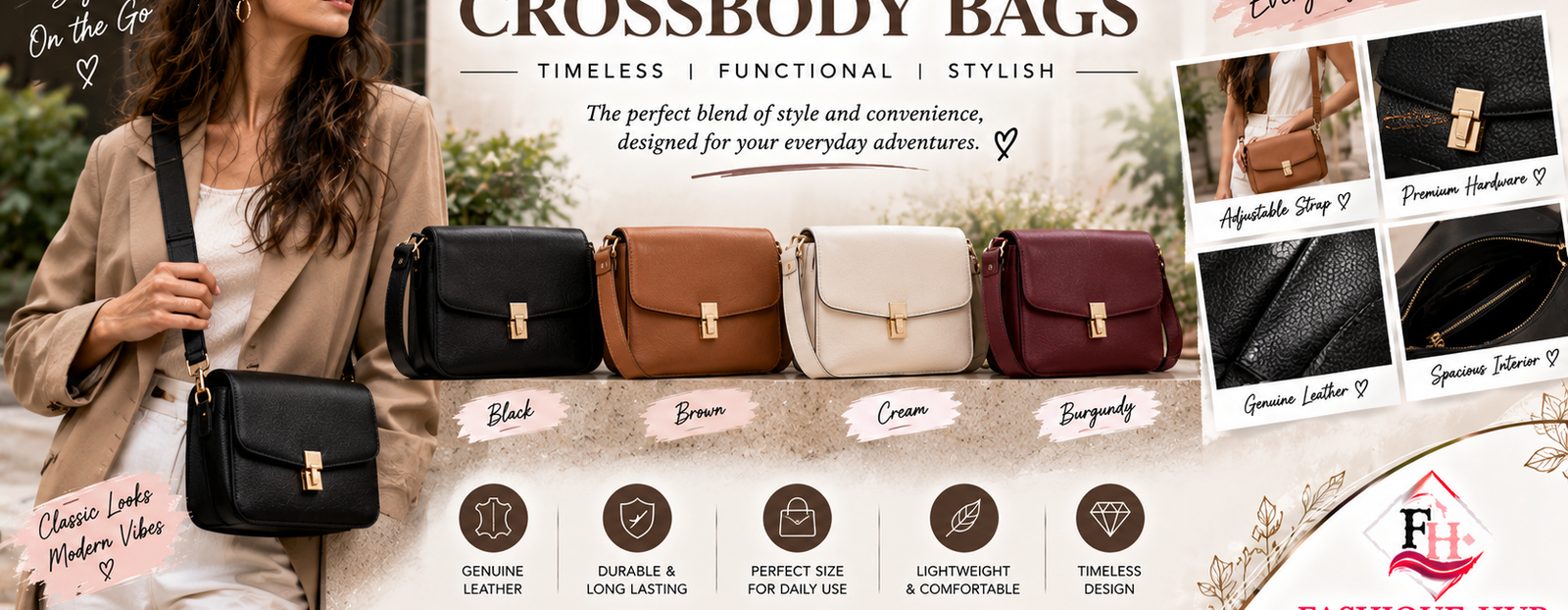
Search “leather crossbody bag” and you’ll get hundreds of near-identical product roundups ten bags, a price, a photo, done. What almost none of them explain is how to actually evaluate a bag yourself what “full-grain” really means versus “genuine leather” (a label that’s far less reassuring than it sounds), which stitching details signal real craftsmanship, and why a $70 bag and a $400 bag can both be legitimately worth their price depending on what you need. This guide fills in that gap.
What Actually Makes a Bag a “Leather” Crossbody
A leather crossbody bags is simply a bag worn across the body on a single strap, made from genuine leather rather than canvas, nylon, or synthetic alternatives. That sounds obvious, but the “genuine leather” label specifically is where a lot of buyers get misled it’s a legal labeling term, not a quality marker, and it sits at the bottom of the real leather hierarchy rather than the top. Understanding that hierarchy is the single most useful thing you can learn before spending real money on one of these bags.
The Leather Grade Hierarchy, Explained Honestly
Full-Grain Leather
The entire original hide, including the natural grain, imperfections, and texture. It’s the strongest, most durable option, and it develops a genuine patina a richer, slightly darkened sheen the more it’s handled and exposed to light. This is what you want if you’re buying one leather crossbody bags to last a decade.
Top-Grain Leather
The hide with the very top layer sanded away and a corrected, more uniform finish applied. It’s still a quality material, more scratch-resistant and consistent-looking than full-grain, but it won’t develop the same character over time since the natural surface has been smoothed away.
Genuine Leather
Despite how it sounds, this is actually the lowest tier of real leather made from the layers left over after the top grain has been split away, often coated or embossed to look more uniform. It’s real leather, so it’s not synthetic, but it’s also the least durable and least premium option that can still legally use the word “leather” on a label.
Vegetable-Tanned Leather
Tanned using natural plant extracts rather than chemical processes. It ages beautifully into a rich, natural patina and tends to be the more eco-conscious choice, though it’s generally less water-resistant unless separately treated, making it better suited to heritage-style bags than daily rain-or-shine carry.
Vegan or Faux Leather
Made from PU, PVC, or newer plant-based materials rather than animal hide. Quality varies enormously here the best versions are genuinely difficult to distinguish from real leather at a glance, while the cheapest versions crack and peel within a year or two.
The Construction Checklist Most Buying Guides Skip
Material grade only tells half the story. The actual construction is what determines whether a bag survives daily use or falls apart within months, and a few specific details separate well-made bags from poorly made ones regardless of price point:
- Tight, even stitching with no loose threads. Hand-saddle stitching, where you can see slightly angled, interlocking thread rather than a perfectly straight machine line, is generally a sign of higher-end construction.
- Burnished or edge-painted raw edges. Unfinished, raw-cut leather edges will fray and fuzz over time; a properly burnished or painted edge resists that wear significantly longer.
- A full sewn-in lining, whether canvas, cotton, or leather, rather than a glued-in patch that can peel away from the interior walls after repeated use.
- Hardware that feels substantial, not lightweight or hollow zippers, buckles, and D-rings are among the first components to fail on a lower-quality bag, often well before the leather itself shows any wear.
What’s Actually Trending in Leather Crossbody Bags Right Now
Sling and Mini Crossbody Bags
Compact, lightweight, hands-free styles remain one of the strongest trends in the category, prized specifically for how easily they transition from a daytime errand run into an evening out without needing to be swapped for a different bag entirely.
Suede and Warm, Textured Finishes
Suede has become the single most repeated material trend recently, chocolate brown suede especially, reflecting a broader shift toward leather that looks better the more it’s carried rather than leather that’s meant to look pristine and untouched.
Defined Profiles and Structure
Alongside the softer, slouchy end of the category, there’s a parallel trend toward well-defined, sculptural silhouettes bags with visible structure, ruffled or paneled detailing, and a more architectural shape rather than a purely soft, shapeless slouch.
Texture and Patina Over Branding
The broader direction across the category favors relaxed silhouettes, refined texture, and genuine craftsmanship over loud branding or visible logos, rewarding full-grain and vegetable-tanned leather specifically for the way they age into character rather than staying static.
RFID-Blocking Worth It or Marketing?
Many current crossbody listings advertise built-in RFID-blocking card slots, designed to prevent contactless card skimming while you’re out. For anyone who regularly travels or uses a leather crossbody bags as their primary daily carry in crowded urban environments, this is a genuinely useful feature rather than pure marketing, since it adds a layer of protection without requiring any extra effort or a separate wallet accessory. It’s a small added cost that’s worth prioritizing if you’ll be carrying cards or a passport in the bag regularly.
Choosing the Right Crossbody for Your Actual Use Case
Rather than shopping by trend alone, matching the bag to how you’ll actually use it produces a far better long-term purchase:
- Daily commuter: A full-grain or top-grain leather bag with a secure zip closure and a genuinely comfortable, padded or wide strap holds up best to repeated daily wear.
- Travel: Prioritize RFID-blocking, multiple organized compartments, and a slightly more structured shape that resists crushing in a packed suitcase or overhead bin.
- Evening or dressier occasions: A smaller, more minimal-hardware style in a smoother leather finish reads as considerably more polished than a bulkier daily-carry bag.
- Casual weekend wear: A vegetable-tanned bucket or saddle-style crossbody leans into the relaxed, textured mood currently trending, and develops character with wear rather than needing to stay pristine.
- First-time leather buyers: Starting with a smaller, less expensive genuine leather crossbody bags is a smart way to learn whether the format actually fits your routine before committing to a larger investment piece.
Realistic Price Ranges and What You’re Actually Paying For
Leather crossbody bags pricing spans an enormous range, and understanding roughly what each tier buys helps set realistic expectations:
- Budget ($40–$150): Mostly faux leather or entry-level genuine leather. Fine for occasional use or as a first purchase, but expect a shorter lifespan and less durable hardware.
- Mid-range ($150–$400): Where most quality full-grain and top-grain leather bags from established brands land, typically with better stitching, hardware, and lining construction than the budget tier.
- Mid-to-high ($200–$700): Vegetable-tanned bucket and saddle styles, along with more artisanal or small-batch construction, often fall in this range, reflecting the slower tanning and finishing process involved.
- Premium (above $700): Typically reserved for established luxury houses, where you’re paying as much for brand heritage and design as for the raw materials and construction itself.
As a general rule, if a bag is marketed as “genuine leather” at a price point that seems unusually low for that claim, it’s worth assuming it sits at the lower end of the genuine leather tier rather than expecting full-grain quality.
Caring for a Leather Crossbody Bag
A properly cared-for leather bag can genuinely last decades, but it does require some ongoing attention:
- Condition the leather every few months, especially for full-grain and vegetable-tanned styles, to prevent the surface from drying out and cracking over time.
- Avoid prolonged direct sunlight, which can fade color and dry out natural leather fibers faster than normal handling would.
- Store the bag stuffed with tissue paper rather than flat or crushed, to help it hold its shape between uses.
- Wipe away moisture promptly if the bag gets wet, and let it air dry naturally away from direct heat sources, which can cause leather to stiffen or warp.
- Clean hardware separately with a soft, dry cloth to prevent tarnishing, since leather conditioner and cleaner can sometimes dull metal finishes if applied too broadly.
Building a Complete Accessory Collection
A leather crossbody bags is one piece of a broader, well-considered bag wardrobe rather than a single do-everything purchase. For a wider look at how crossbody bags compare to totes, satchels, and other silhouettes, our guide to the full range of handbag types breaks down when each shape actually makes the most sense. If you’re building out an evening-specific bag alongside your everyday crossbody, our roundup of How to Find Your Personal Style A Complete 2026 Guide covers the formal end of the spectrum this guide doesn’t.
For a shoulder-bag alternative to compare against a crossbody for your daily rotation, our breakdown of the Coach shoulder bag lineup is worth reading side by side with this guide, and if your personal style leans toward understated, quality-over-branding pieces generally, our look at old money and quiet luxury style principles reflects a lot of the same philosophy driving the current shift away from logo-heavy leather goods.
Final Thoughts
The best leather crossbody bags isn’t the one topping the most “best of” lists it’s the one whose leather grade, construction quality, and feature set actually match how you intend to use it. Full-grain and vegetable-tanned leather reward patience and develop real character over years of wear, while a well-made genuine leather or vegan option can be a perfectly smart choice for lighter, more occasional use. Understanding the real difference between those tiers, and checking the stitching and hardware details most roundups skip entirely, is what actually separates a bag that lasts from one that doesn’t.
FAQ
What’s the difference between full-grain and genuine leather?
Full-grain leather is the entire original hide with its natural texture intact, offering the most durability and the best patina over time. “Genuine leather” is actually the lowest tier of real leather, made from the layers left after the top grain has been split away.
Are leather crossbody bags good for travel?
Yes, particularly styles with RFID-blocking card slots and multiple organized compartments, which protect against contactless skimming and keep essentials secure and accessible while moving through airports or crowded areas.
How much should I spend on a leather crossbody bag?
It depends on intended use: $40–$150 is realistic for occasional or budget use, $150–$400 covers most quality full-grain and top-grain options from established brands, and anything above that typically reflects artisanal construction or luxury brand heritage.
How do I keep a leather crossbody bag from cracking?
Condition it every few months, avoid prolonged direct sunlight, store it stuffed with tissue paper to hold its shape, and let it air dry naturally if it gets wet rather than exposing it to direct heat.