
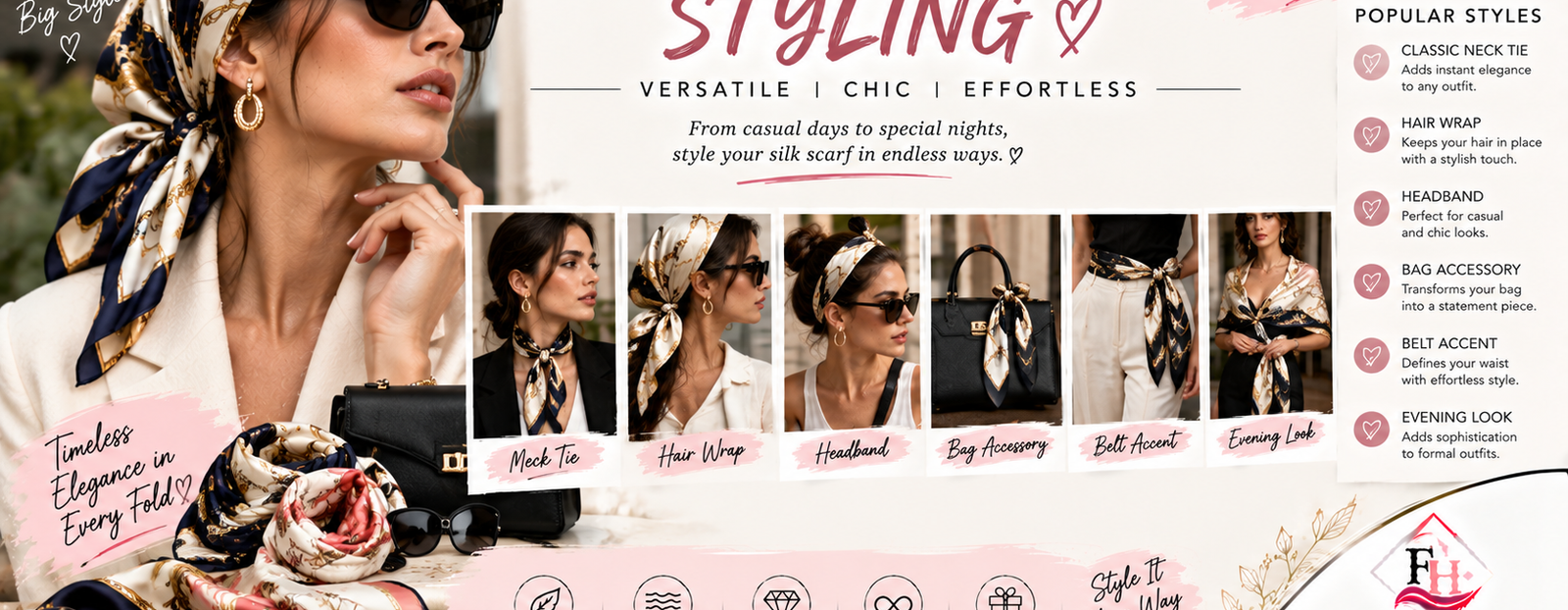
A silk scarf might be the single most underrated piece of clothing most people own. It usually lives folded in a drawer, pulled out once or twice a year, when it’s genuinely one of the most versatile accessories available capable of turning a plain t-shirt into an outfit, updating a coat you’ve worn for five winters, or rescuing a bag that’s started to feel boring. This guide covers every major way to actually wear one, the specific technique names stylists use, the trend currently dominating fashion coverage, and how to buy and care for silk so it lasts.
Why Silk Scarves Are Having Such a Big Moment Right Now
Silk square scarves are experiencing a genuine comeback in fashion accessories, and unlike a lot of trend-driven pieces, the appeal here is functional as much as aesthetic a single scarf can transform the same outfit six or seven different ways depending on how it’s tied. That versatility is exactly why fashion editors keep returning to the “one scarf, many looks” format rather than treating it as a single-use accessory.
The biggest specific trend driving renewed interest this year is the scarf-as-belt look tying a long, fringed silk scarf around the waist, often layered over a coat or jacket, or worn more simply with a turtleneck and trousers. It’s been closely associated with Kendall Jenner’s off-duty styling and has pushed brands like Toteme to sell out of their scarf offerings repeatedly this year. If you only try one new technique from this guide, the waist scarf is currently the most fashion-forward place to start.
Understanding Scarf Shapes and Sizes First
Before getting into specific ties, it helps to know what you’re actually working with, since the shape and dimensions of your scarf determine which techniques will work.
- The square scarf (or “carré”) is the classic silk scarf shape, and sizing varies by brand a small square scarf works best folded into a thin band for neck or hair ties, while a large square (some luxury brands’ largest format spans nearly a meter across) has enough fabric to work as a shawl or even a top.
- The oblong or rectangular scarf is longer and narrower, ideal for draping, looping, or the waist-belt trend, since it already has the elongated shape those techniques need without extra folding.
- The long fringe or “smoking” scarf specifically refers to a narrow, tasseled rectangular style, the exact shape driving this year’s waist-tie trend.
12 Ways to Style a Silk Scarf
1. The Not-Too-Perfect Neck Tie
Fold the scarf into a slim strip or triangle, wrap it around your neck front to back, and tie it loosely in front slightly off-center reads more effortless than a perfectly centered knot. This works over a plain tee, a button-down, or layered under a blazer when you want a small extra detail without adding real bulk.
2. The French Knot
Fold the scarf in half to create a loop, drape it around your neck, and pull the loose ends through the folded loop rather than tying a traditional knot. It’s a more refined, polished version of the basic neck tie, and pairs especially well with structured coats or silk blouses.
3. The Cravat
Fold the scarf into a narrow band and tie it at the front of the neck in a loose, low knot, letting the ends hang rather than tucking them in. This technique borrows directly from menswear styling and works well with an open-collar shirt.
4. The Half-Bow
Fold the scarf into a strip, wrap it around the neck, and tie the ends into a loose, asymmetric half-bow rather than a symmetrical knot. It’s specifically good for showing off a printed scarf’s pattern, since the loose bow shape keeps more of the fabric visible than a tightly wound knot.
5. The Once-Around
One of the simplest rectangular scarf ties available: wrap the scarf once around your neck and let one end hang slightly longer than the other. It works with silk, wool, or cashmere equally well and requires no real folding or knotting technique at all.
6. The Waist Belt
Tie a long, fringed silk scarf around your waist, either directly over a shirt or trousers or layered on top of a coat or jacket. This is 2026’s standout trend, and it works particularly well with a black satin jacket and trousers, a turtleneck and denim, or a striped scarf tied over a classic camel coat.
7. Shawl Style
Fold a larger scarf into a triangle and drape it over your shoulders, tying the ends loosely in front, or securing them with a scarf ring instead of a knot. This is the most formal use of a silk scarf on this list, ideal for layering over a dress at an evening event.
8. The Ponytail or Bun Wrap
Fold the scarf into a thin band and tie it around the base of a ponytail or bun, letting the ends drape or knotting them into a small bow. A single silk scarf can instantly elevate an otherwise plain hairstyle, and it’s one of the lowest-effort techniques on this entire list.
9. The Headscarf
Fold the scarf into a triangle, place it over your hair, and tie it under your chin or at the nape of the neck. Headscarves have become especially relevant again recently, transitioning naturally between warm and cooler seasons as a genuine styling category rather than a purely practical choice.
10. The Bag Charm
Knot a scarf onto the handle of a tote or shoulder bag, or wrap it fully around the handle itself. This is arguably the easiest entry point into silk scarf styling, since it requires no tying skill against your own body and instantly adds color and texture to a bag you already carry daily.
11. The Knotted Double Loop
Wrap the scarf around your neck twice, then knot the ends at the front or side. This works well with both airy silk and heavier wool scarves, making it a genuinely versatile cold-weather technique that doesn’t require switching accessories between fabric weights.
12. The Wrapped Top
For warmer weather specifically, a large square silk scarf can be folded and tied around the torso as a standalone top, secured at the back or side. This is the boldest technique on the list and works best with a scarf large enough to provide real coverage typically the largest square format a brand offers.
How to Choose the Right Scarf for Each Technique
- Neck ties (French knot, cravat, half-bow): A medium square scarf, folded into a strip, gives you the most control over knot size and drape.
- Waist belt: A long, narrow rectangular or fringed scarf works far better than a square, since it already has the length the technique needs.
- Shawl or wrapped top: Reach for the largest square scarf you own a small scarf simply won’t provide enough coverage for either technique.
- Hair and bag styling: Smaller or even slightly worn scarves work perfectly here, making this a great way to give a damaged or well-loved scarf new life.
How to Tell Real Silk From a Synthetic Imitation
Since silk scarves span a huge price range, it’s worth knowing how to check quality before buying, especially secondhand. Genuine silk has a distinctive, slightly warm feel rather than the cool, slippery touch of polyester, and it holds a defined crease when scrunched rather than springing back instantly the way synthetic fabric does. Real silk also burns rather than melts when a small thread is tested with a flame, leaving an ash residue rather than a hardened plastic bead a test worth knowing if you’re evaluating a vintage or secondhand piece before a larger purchase.
Caring for Your Silk Scarves
Silk requires more care than most everyday fabrics, but the payoff is a piece that can genuinely last decades:
- Hand wash in cold water with a gentle, silk-specific detergent, or take particularly valuable pieces to a professional cleaner rather than risking machine washing.
- Never wring silk to dry it. Press excess water out gently between towels instead, then lay flat or hang to air dry away from direct sunlight, which can fade the print over time.
- Store scarves rolled rather than folded when possible, since folding along the same crease repeatedly can weaken and eventually break the fibers along that line.
- Keep silk away from perfume and direct spray contact, since alcohol-based fragrances can stain or discolor delicate silk fibers.
Building a Complete Scarf Wardrobe
A silk scarf is only one piece of a broader scarf collection worth understanding. If you’re drawn to the headscarf technique specifically and want to go deeper into fabric choices and tying methods built for that use, our full breakdown of head-covering styles and current trends expands significantly on that specific category. For everyday, wash-and-wear scarves in modal, jersey, and chiffon rather than silk specifically, our guide to a well-known scarf brand’s fabric lineup is worth a look for building out a more casual, daily rotation alongside your silk pieces.
For jewelry to pair with a scarf-centered outfit, keeping accessories minimal lets the scarf remain the visual focal point our necklace styling breakdown covers that same “let one piece lead” philosophy that applies just as well here. And if you’re building the waist-scarf trend into a full outfit, our roundup of current handbag silhouettes can help you choose a bag shape that complements rather than competes with a scarf belt.
Final Thoughts
A single silk scarf genuinely can deliver a dozen different looks, from a polished French knot under a blazer to this year’s standout waist-belt trend, a casual bag charm, or a full shawl for an evening event. The techniques themselves cost nothing to learn and require no additional purchases beyond the scarf you likely already own the only real investment is a few minutes of practice tying each style until it becomes second nature.
FAQ
What is the biggest silk scarf trend right now?
Tying a long, fringed silk scarf around the waist often over a coat, jacket, or turtleneck has become 2026’s standout scarf trend, closely associated with Kendall Jenner’s styling and driving several brands to sell out their scarf collections.
How do I tell if a scarf is real silk?
Real silk has a warm, slightly textured feel rather than a cool, slippery synthetic touch, holds a defined crease when scrunched, and burns rather than melts if a small thread is flame-tested, leaving ash rather than a hardened bead.
What’s the easiest way to start wearing silk scarves if I’m not confident tying them?
Knotting a scarf onto a bag handle requires no tying skill at all and is one of the simplest ways to incorporate a silk scarf into your everyday style before moving on to neck or hair techniques.
How should I store silk scarves to prevent damage?
Roll them rather than folding along the same crease repeatedly, keep them away from direct sunlight and perfume, and hand wash in cold water with a silk-specific detergent rather than machine washing.



1 Comment
[…] trending pieces at once. If you want to build your own version of this top, our full breakdown of silk scarf tying techniques covers exactly how to wrap one into a wearable top […]