Scroll through any fashion feed and you’ll see the terms “streetwear” and “casual wear” used almost interchangeably but they’re not the same thing, and understanding the difference actually changes how you shop, how you build a wardrobe, and what your outfit communicates before you say a single word. Both styles are relaxed, both reject traditional formality, and both share overlapping pieces like tees, hoodies, and sneakers. Yet the philosophy behind each one is completely different. Here’s a complete, up-to-date breakdown of streetwear vs casual wear in 2026, including how to tell them apart and how to blend both into a wardrobe that actually fits your life.
The Core Difference Intent
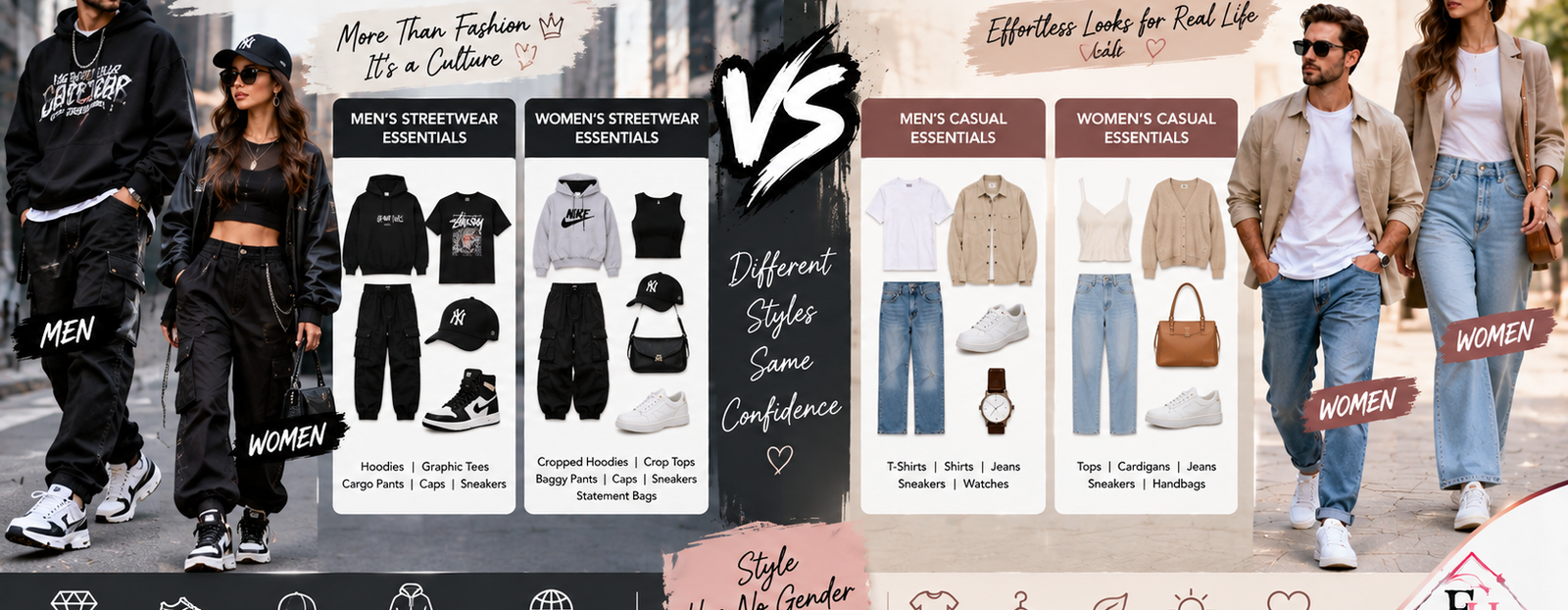
If there’s one idea to take away from this entire comparison, it’s this: the difference between streetwear and casual wear comes down to intent. Streetwear is built to make a statement, carrying cultural weight and a specific point of view. Casual wear, on the other hand, is designed to be practical and comfortable, with no particular cultural agenda attached to it. A plain white tee and well-fitted chinos are casual wear. A limited-release graphic hoodie tied to a specific artist, skate brand, or cultural moment is streetwear. Both might look relaxed on the surface, but one is a default setting, and the other is closer to customized software deliberately chosen to say something about the person wearing it.
What Defines Streetwear
Streetwear is a community-rooted style built on cultural identity, bold graphics, and limited-edition releases. It emerged out of skate, hip-hop, and music culture, and that connection still shapes the aesthetic today. A few defining traits of streetwear:
- Bold graphics and logos — large branding, statement prints, and eye-catching design details
- Oversized, exaggerated fits — baggy, cropped, or deliberately loose silhouettes that signal confidence and cultural awareness
- Limited releases and drops — pieces are often manufactured in limited supply, which drives resale value and cultural cachet
- Cultural connection — streetwear carries a specific point of view tied to music, art, and skate culture, rather than being culturally neutral
- Premium or high-end pricing — even mass-market streetwear pieces tend to sit at a higher price point than basic casual wear, and resale markets can push prices even higher
What Defines Casual Wear
Casual wear is the foundation of modern everyday dressing. It prioritizes comfort, versatility, and broad wearability across as many settings as possible. Key traits include:
- Simple, timeless designs — neutral palettes and classic silhouettes rather than bold statement pieces
- Closer, more tailored fit — casual wear typically runs closer to the body with relaxed but neat proportions, unlike streetwear’s oversized cuts
- Mass accessibility — casual pieces are widely available, interchangeable, and generally affordable
- No cultural agenda — a crewneck sweater or a pair of clean sneakers doesn’t carry the same subcultural signal that a streetwear piece does
- Effortless versatility — casual wear moves easily from running errands to an informal office setting without requiring much thought
Streetwear vs Casual Wear: Side-by-Side Comparison
| Streetwear | Casual Wear | |
|---|---|---|
| Motivation | Statement and self-expression | Comfort and ease |
| Fit | Oversized, exaggerated, cropped, or structured | Standard, relaxed, closer to the body |
| Cultural tie | Rooted in music, art, and skate culture | No specific cultural connection |
| Price point | Often premium or high-end resale | Usually low to mid-range |
| Manufacturing | Limited-edition drops | Mass-produced, widely available |
| Design details | Bold graphics, large logos, statement prints | Simple, neutral, timeless designs |
Why the Line Between the Two Is Blurring in 2026
While streetwear and casual wear started as two distinct categories, 2026 has seen them blend more than ever before. Oversized fits, heavyweight fabrics, and relaxed silhouettes that originated in streetwear have directly shaped mainstream casual wear trends this year, with many casual brands now borrowing streetwear-style proportions while keeping a more minimal, everyday aesthetic. At the same time, designer and elevated pieces have become part of regular rotation rather than being reserved for special occasions, pushing both categories closer together. Rather than one style dominating, personal expression has become the real trend of the year people are mixing streetwear and casual pieces based on lifestyle and mood rather than sticking strictly to one category.
How to Style Streetwear
Building a streetwear-inspired outfit is less about buying one specific item and more about layering and proportion. A few reliable formulas:
- Anchor the outfit with an oversized piece — a graphic hoodie, oversized tee, or statement jacket sets the tone.
- Balance proportions — pair an oversized top with slimmer bottoms, or vice versa, to avoid looking overwhelmed by fabric.
- Choose statement footwear — sneakers remain the backbone of streetwear styling, often chosen specifically for cultural relevance or collectibility.
- Layer intentionally — jackets, vests, and accessories add visual interest and depth to an otherwise simple base outfit.
- Mix in one casual basic — pairing a graphic hoodie with simple denim keeps the outfit expressive without feeling like a costume.
How to Style Casual Wear
Casual wear works best when you focus on fit and quality over trend-chasing. A few tips for building an elevated casual wardrobe:
- Invest in well-fitted basics — a properly tailored tee, chino, or crewneck goes further than a closet full of trendy pieces.
- Stick to a simple color palette — neutral tones make it easier to mix and match without much thought.
- Add one elevated piece — a quality jacket or well-made shoe instantly upgrades a simple outfit without sacrificing comfort.
- Keep accessories minimal — casual wear leans on simplicity, so a few well-chosen pieces go further than a fully accessorized look.
Which Style Is Right for You?
Neither style is inherently better they simply solve different needs. If you want your clothing to reflect a specific point of view, cultural interest, or creative identity, streetwear gives you the tools to do that. If you want a reliable, comfortable wardrobe that works across nearly any casual setting with minimal effort, casual wear is the more practical choice. Many people don’t have to choose exclusively mixing pieces from both categories, like a graphic hoodie with tailored trousers, has become one of the most popular ways to dress in 2026, allowing for both comfort and personal expression in the same outfit.
Finding Where You Fit Between the Two
If you’re still figuring out which direction suits you best, it helps to think about it the same way you’d approach any personal style decision: through trial, reflection, and paying attention to what actually feels like you. This guide on how to find your personal style walks through practical steps for identifying your natural preferences, whether that leans toward streetwear’s bold statements or casual wear’s understated ease. And if you’re building out a full wardrobe for the season ahead, this roundup of summer outfit ideas shows how several of this year’s biggest trends from oversized silhouettes to sporty jerseys already blend elements of both streetwear and casual dressing.
Pairing Your Outfit With the Right Beauty Routine
Whether you’re leaning streetwear or casual, your beauty routine should match the energy of your outfit. A bold streetwear look pairs well with a natural, low-maintenance face a lightweight foundation keeps the focus on your clothing rather than a heavy, done-up look. For a softer casual outfit, a warm-toned blush adds an easy, effortless glow that complements the relaxed nature of the style. And if you’re experimenting with bolder streetwear-inspired makeup to match a statement outfit, this guide to the best eyeshadow colors for every skin tone can help you choose shades that feel just as intentional as your clothing choices.
Final Thoughts
Streetwear and casual wear may share the same relaxed foundation, tees, hoodies, sneakers, and an easy-going attitude, but the philosophy behind each is genuinely different. Streetwear is built to communicate identity and cultural connection, while casual wear is built for comfort and effortless versatility. In 2026, the two styles are blending more than ever, giving you the freedom to mix bold statement pieces with simple, reliable basics depending on your mood and setting. Understanding the difference isn’t about picking a side it’s about knowing which one to reach for, and when.
Frequently Asked Questions
What is the main difference between streetwear and casual wear?
The core difference comes down to intent. Streetwear is designed to make a cultural statement through bold graphics, oversized fits, and limited releases, while casual wear prioritizes comfort, simplicity, and broad everyday wearability.
Can streetwear and casual wear be worn together?
Yes, and in 2026 this has become one of the most popular ways to dress. Pairing an oversized graphic hoodie with simple, well-fitted denim, for example, blends the statement-making energy of streetwear with the practicality of casual wear.
Is streetwear more expensive than casual wear?
Generally, yes. Streetwear pieces are often produced in limited quantities, which drives up both retail and resale prices, while casual wear tends to be mass-produced and more affordable and widely accessible.
Why do streetwear and casual wear look so similar right now?
Streetwear’s oversized fits and relaxed silhouettes have significantly influenced mainstream casual wear trends in 2026, with many casual brands now incorporating streetwear-inspired proportions while keeping a simpler, more minimal aesthetic overall.
How do I know if my personal style leans more streetwear or casual?
Pay attention to what you’re drawn to: if you gravitate toward bold graphics, statement sneakers, and pieces tied to specific cultural moments, you likely lean streetwear. If you prefer simple, timeless basics that prioritize comfort and versatility, casual wear is probably the better fit.
Is streetwear only for younger people?
No. While streetwear originated in youth-driven skate and hip-hop culture, it has since expanded into mainstream fashion across age groups, with designer collaborations and elevated streetwear pieces now appearing in everyday wardrobes well beyond its original audience.