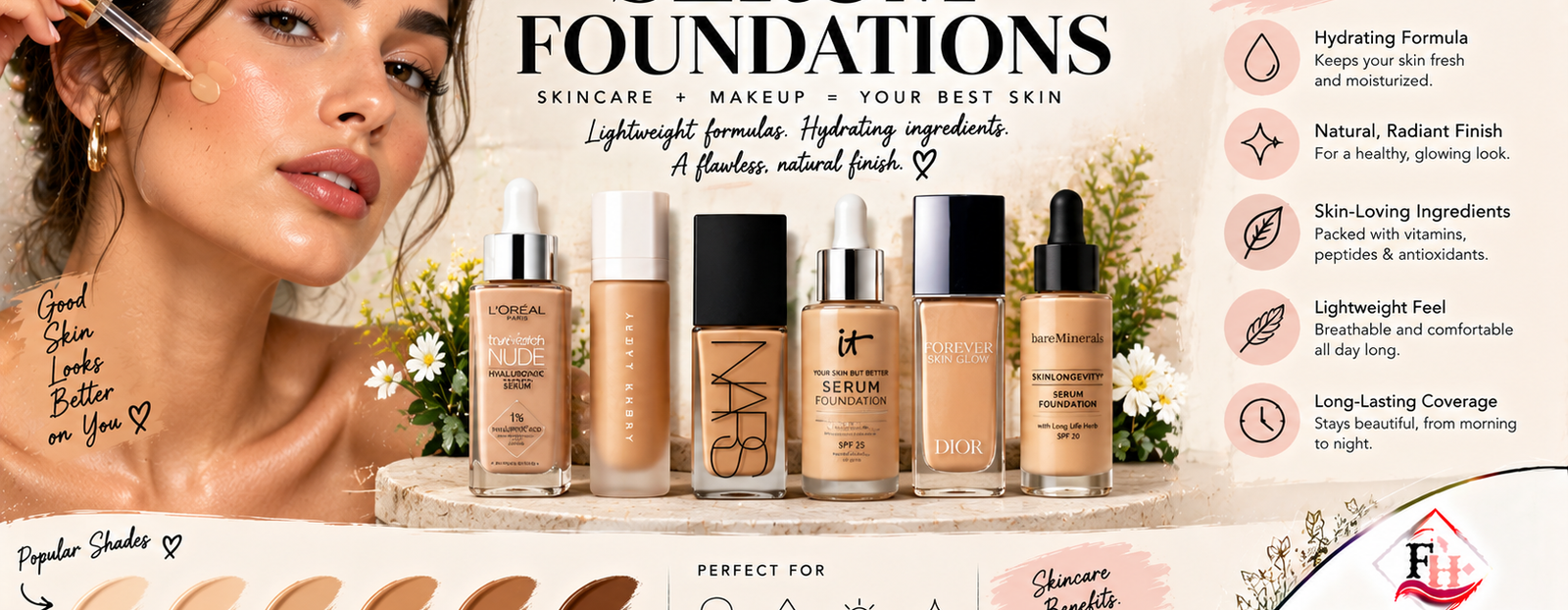
Serum foundations promise the best of both worlds the glow and comfort of skincare with enough pigment to even out your complexion. Some deliver exactly that. Others are essentially a lightly tinted lotion with a premium price tag, and the product names rarely tell you which is which. This guide explains how a serum foundation differs from a skin tint and a tinted moisturizer, what the “skincare” part can and can’t do, who should skip them, and a shortlist of options at different price points.
What Is a Serum Foundation?
A serum foundation is a lightweight, fluid base makeup that combines pigment with skincare-style ingredients such as hyaluronic acid, peptides, niacinamide, or squalane. Beauty editors describe the category as bridging the gap between skincare and makeup, offering a radiant finish at lighter coverage than a traditional foundation. Most are sheer to medium and buildable, and they’re usually dispensed from a dropper or pump rather than a thick tube.
Serum Foundation vs Skin Tint vs Tinted Moisturizer vs Foundation
These terms overlap, and brands use them loosely, so judge a product by its coverage and texture, not just its label. The general pattern, as described by several brands and beauty sites:
| Type | Typical Coverage | Feel | Best For |
|---|---|---|---|
| Skin tint | Sheerest, close to none | Very thin, like a serum | Evening tone with a “no makeup” look |
| Tinted moisturizer | Sheer to light | Creamier, hydration-first | Dry skin, casual daily wear |
| Serum foundation / tinted serum | Light to medium, often buildable | Fluid, skincare-forward | Anyone wanting glow with real tone correction |
| Traditional foundation | Medium to full | Thicker, finish-focused | Concealing blemishes, long-wear events |
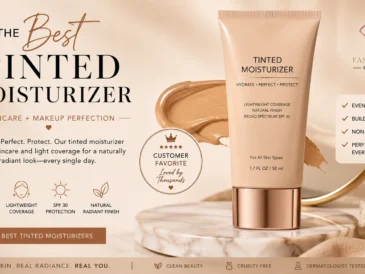
One useful rule from the makers of one tinted-serum line: a tinted moisturizer works like a nourishing cream that doubles as makeup, while a tinted serum behaves like skincare with added tint for radiance. If you already own a tinted moisturizer and like it, our roundup of the best tinted moisturizers will help you decide whether a serum foundation is actually an upgrade.
What the “Skincare” Part Really Means
Serum foundations typically list ingredients like hyaluronic acid (a humectant that attracts moisture), peptides, and niacinamide. It’s reasonable to expect a comfortable, hydrated feel and less of the “dry patches” look some matte formulas create. It’s less reasonable to expect your foundation to replace a dedicated serum, moisturizer, or sunscreen, because the active ingredients are present in a product that sits on skin for only part of a day and then gets washed off.
The SPF reality check. Some serum foundations include SPF, such as ILIA’s Super Serum Skin Tint at SPF 40, and Clinique and bareMinerals’ serum foundations at SPF 20. But most people apply much less foundation than the amount tested for SPF ratings, so the number on the bottle usually overstates your real protection. For reliable sun protection, apply a dedicated sunscreen first, let it absorb, then put your tinted product on top. Our guide to gentle centella sunscreens is a good place to find a face sunscreen that sits well under makeup.
Who Serum Foundations Suit
- Dry or dehydrated skin: The hydrating base tends to avoid clinging to dry patches.
- Mature skin: Lighter formulas are less likely to settle into fine lines than heavy, matte foundations.
- Sensitive skin: Look for fragrance-free options; Neutrogena’s Sensitive Skin Serum Foundation is positioned for sensitive and dry skin.
- Minimal-makeup routines: If you want even tone without a “done” look, light to medium coverage is the whole point.
- Oily skin: Not off-limits, but choose a formula labeled matte or oil-control. MAC’s Studio Radiance Serum-Powered Foundation is described by editors as a lightweight, buildable option that suits oilier skin.
Who Might Skip Them
- Anyone who wants full, matte coverage for photography, events, or active acne. The lighter formulas won’t hide significant discoloration. One editor reviewing L’Oréal Paris True Match Nude Plumping Tinted Skin Serum noted it has light coverage and doesn’t conceal blemishes.
- People who want 12-plus hours of wear without touch-ups, since fluid formulas often fade faster.
12 Serum Foundations Worth Knowing
These come from a 2026 editor roundup, a UK beauty-team roundup, and retailer listings. Pricing changes, so check the live page.
| Product | Best For | Notes From Reviewers and Listings |
|---|---|---|
| Victoria Beckham The Foundation Drops | Overall pick | Named best overall in a 2026 Who What Wear expert list |
| Neutrogena Sensitive Skin Serum Foundation | Drugstore, sensitive/dry skin | Lightweight, skincare-infused |
| Hermès Plein Air Luminous Matte Skincare Foundation | Luxury | Listed as the top luxury pick |
| ILIA Super Serum Skin Tint SPF 40 | Dry skin | Includes SPF 40, sheer tint |
| MAC Studio Radiance Serum-Powered Foundation | Oily skin, buildable coverage | Described as weightless and not clinging to dry patches |
| Drunk Elephant Kamo Triple-Peptide Multi-Use Serum Foundation | Higher coverage | Chosen for coverage among serum-style options |
| Outside In Silk Serum Foundation | Glow | Praised for a radiant finish |
| M.Ph Le Skin Weightless Serum Foundation | Lightweight feel | Named for a weightless texture |
| L’Oréal Paris True Match Nude Plumping Tinted Skin Serum | Budget, light coverage | Pure hyaluronic acid, 9 shades, light coverage |
| Clinique Even Better Clinical Serum Foundation SPF 20 | Buildable coverage with SPF | Tested for allergies, with a broad shade range |
| Revolution Skin Silk Serum Foundation | Budget | About $15 at Walmart, 13 shades, hyaluronic acid and peptides |
| Ogee Complexion Perfecting Serum Foundation | Clean beauty | About $49 |
Treat these as starting points. One shopper review of a different serum foundation described a runny texture that looked streaky on their skin, which illustrates that thin formulas can be less forgiving to apply even when the ingredient list looks great.
How to Choose the Right One
- Decide your coverage first. Be honest about whether you want sheer, medium, or something close to full.
- Check the shade range. Fewer shades mean fewer chances of a true match, and a formula with 9 shades will be less flexible than one with 13 or more.
- Pick a finish for your skin type. Dewy for dry and mature skin, matte or oil-control for oily skin.
- Look at the SPF, but don’t rely on it. Treat any SPF as a bonus, not a replacement for sunscreen.
- Scan for fragrance if you have sensitive skin, since a few reviewers note a noticeable scent in some formulas.
- Test in daylight along the jaw and neck, not just on your hand.
How to Apply a Serum Foundation (and Avoid Streaks)
- Prep lightly. Let moisturizer and sunscreen absorb fully first, since layering too much on top of wet skincare can make a thin formula slip or streak.
- Start with a small amount. Fluid formulas spread further than they look.
- Apply with fingers, a damp sponge, or a brush. Fingers give the most natural, skin-like finish, while a sponge builds more coverage.
- Build in thin layers only where you need more, rather than adding a thick coat everywhere.
- Spot-conceal instead of layering foundation. A little concealer on blemishes or dark circles keeps the rest of your skin looking natural; our breakdown of Tarte Shape Tape shades explains how to match one.
- Set only where needed. A light dusting of powder on the T-zone is enough for most people.
A useful trick: If you want less coverage from a regular foundation, mixing a few drops of a tint or serum into it can sheer it out, and mixing a drop of foundation into a tint can boost coverage slightly.
Common Mistakes
- Expecting full coverage from a formula designed to be light.
- Using too much at once, which leads to a heavy, slippery finish.
- Skipping sunscreen because the foundation lists an SPF.
- Ignoring undertone, especially with fewer shades available.
- Picking a dewy formula for oily skin without checking for a matte or oil-control finish.
Building a Complete Base Routine
A serum foundation looks best when the rest of your face works with it. Liquid blush blends especially well on a skin-like base, and our guide to the best blush formulas explains which textures layer smoothly. If you’d like to compare against fuller-coverage options for days you need more, our roundup of the best foundations by skin type covers coverage levels and finishes in detail.
Final Thoughts
Serum foundations work best when you treat them for what they are: lightweight, comfortable, skin-first bases that even out tone and add glow rather than hide everything. Pick one by coverage and finish first, check the shade range, treat any SPF as a bonus, and apply in thin layers. If you need more than they can give, concealer in the right places or a switch to a traditional foundation on special days is a smarter fix than layering more serum.
FAQ
What is a serum foundation?
It’s a lightweight, fluid foundation that blends pigment with skincare-style ingredients such as hyaluronic acid, peptides, or niacinamide, typically offering sheer to medium, buildable coverage with a radiant finish.
Is a serum foundation the same as a skin tint?
Not exactly. Skin tints are usually the sheerest option, while serum foundations tend to offer a bit more coverage and a skincare-forward texture, though brands use the terms loosely.
Do serum foundations replace sunscreen?
No. Even when a serum foundation lists an SPF, people typically apply far less than the amount used in testing, so apply a dedicated sunscreen first and let it absorb before your base.
Are serum foundations good for oily skin?
They can be, if you choose a matte or oil-control formula. Dewy, hydrating versions are generally better suited to dry and mature skin.