Walk down any beauty aisle in the USA right now and you’ll notice something: lip oils are everywhere, crowding shelf space that used to belong almost entirely to traditional lip gloss. But does that mean gloss is out? Not exactly. The lip gloss vs lip oil debate isn’t really about one product replacing the other it’s about understanding what each one actually does, so you can pick the right formula for your lips, your look, and your day. Here’s a complete, up-to-date breakdown of the differences, the 2026 trends driving this shift, and how to choose between them.
What Is Lip Gloss?
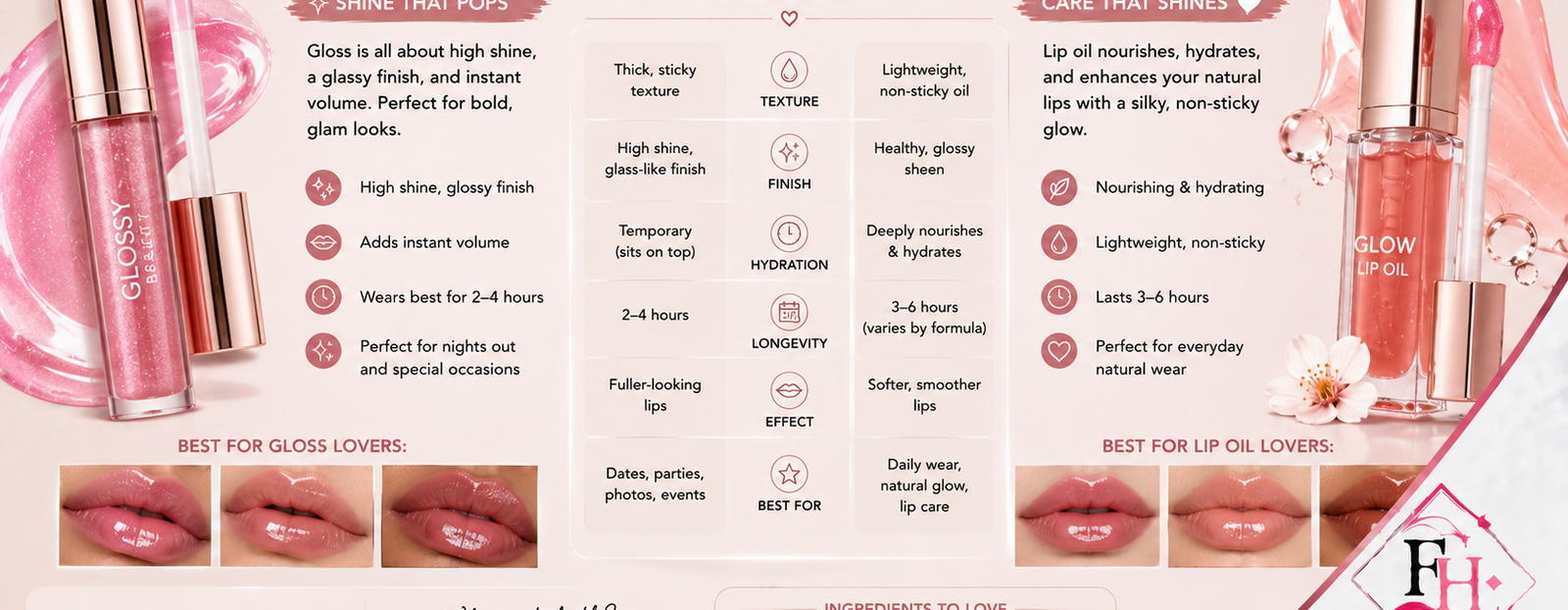
Lip gloss is the timeless, glam-focused product most people grew up wearing. It’s typically formulated with thicker ingredients like waxes or butters, which create a firmer, richer texture that sits on top of the lips. That thicker base is what gives gloss its signature glass-like, reflective shine and its more intense, saturated color payoff. Because it locks moisture in rather than delivering it, gloss offers temporary relief from dryness, but it isn’t designed to nourish or treat the lips the way a skincare product would. The tradeoff for that bold shine and pigment is a texture that can feel heavier and, in humid weather, noticeably stickier.
What Is Lip Oil?
Lip oil is the newer, skincare-hybrid product that’s become one of the defining beauty trends of 2026. Unlike gloss, lip oil is formulated with nourishing oils think jojoba oil, squalane, cherry oil, and vitamin E designed to penetrate and hydrate rather than simply coat the surface. This gives lip oil a noticeably lighter, silkier feel with little to no stickiness, along with a natural, luminous sheen rather than the intense, glass-like reflection of gloss. Lip oils tend to have sheerer pigment than gloss, even when the shade looks bold in the tube, so it’s worth swatching before assuming you’ll get a bold wash of color.
Lip Gloss vs Lip Oil: The Core Differences
| Lip Gloss | Lip Oil | |
|---|---|---|
| Primary purpose | Shine and color first | Hydration first, with shine as a secondary benefit |
| Texture | Thicker, more cushiony, can feel sticky | Lightweight, silky, minimal stickiness |
| Finish | Glass-like, highly reflective | Natural, dewy, glowing shine |
| Pigment | More saturated, richer color payoff | Sheerer, buildable color |
| Skincare benefit | Minimal to none | Hydrating, nourishing ingredients |
| Best for | Bold, glam looks | Everyday, low-maintenance wear |
The clearest way to think about it lip gloss is a makeup product designed for shine, while lip oil is a hybrid product designed for comfort and hydration that happens to shine too.
Why Lip Oil Has Taken Over in 2026
The shift toward lip oil isn’t just a passing trend it reflects a much bigger shift happening across the entire beauty industry. Consumers are increasingly expecting every cosmetic product to offer more than just appearance, and that “skincare-meets-makeup” mindset has fully arrived in the lip category. Just like foundations now include hydrating ingredients and setting sprays contain barrier-support complexes, lip products have become the latest category to embrace this hybrid beauty movement. High-profile lip oil launches, including collections from major beauty and luxury brands, helped push the format into the mainstream, and the format has continued gaining traction with younger consumers who grew up wanting their makeup to double as skincare.
This shift is also tied to the broader move toward natural, glowy, minimalist makeup replacing the ultra-matte, full-glam looks that dominated in years past. As “glass skin” and dewy, no-makeup-makeup aesthetics continue to define mainstream beauty trends, lip oil fits that mood far better than a heavy, high-pigment gloss.
Is Lip Gloss Actually Out of Style?
Not at all it’s simply being used differently. Traditional gloss still delivers a level of bold color intensity and mirror-like shine that lip oil generally can’t match, which makes it the better choice for glam nights out, red-carpet-inspired looks, or any moment where you want maximum shine and saturation. Many people now layer the two: applying a tinted lip oil throughout the day for comfort and hydration, then switching to a gloss for evening events when a stronger finish is the goal.
How to Choose Between Lip Gloss and Lip Oil
Use these quick guidelines to decide which is right for your day:
- Choose lip gloss if you want bold, saturated color, a high-shine glam finish, and don’t mind reapplying throughout the day.
- Choose lip oil if you want a lightweight, comfortable wear, natural hydration, and a soft, dewy sheen that fits an everyday minimalist look.
- Layer both if you want long-lasting comfort with the option to build up shine and color for a special occasion apply lip oil as a hydrating base, then top with gloss for extra shine.
- Start with a balm first if your lips are severely chapped, since most lip oils hydrate but aren’t formulated to repair already-damaged lips.
Ingredients Worth Looking For
If you’re shopping for a lip oil specifically for its skincare benefits, look for formulas featuring jojoba oil, squalane, vitamin E, or cherry oil, all of which are common in the current wave of hydrating lip oils. For lip gloss, ingredients like shea butter or vitamin E can help offset some of the drying effect that heavier wax-based formulas can have over a full day of wear.
Pairing Your Lip Product With the Rest of Your Makeup
Whichever formula you choose, your lip product should work with the rest of your face rather than competing with it. If you’re going for a bold gloss moment, balancing it with a softer eye look keeps the overall makeup from feeling overdone this guide to the best eyeshadow colors for every skin tone can help you choose shades that complement a strong lip rather than clash with it. On days when you’re wearing a sheer, natural lip oil, a warm-toned blush pairs beautifully to complete that soft, glowy look. And if longevity matters more to you than a dewy finish say, for an event where you can’t reapply it’s worth comparing your lip oil or gloss against a long-lasting lipstick formula, since lipstick will generally outperform both when it comes to color staying power.
How This Fits Into 2026’s Bigger Beauty Story
The lip gloss vs lip oil conversation is really part of a much larger shift happening across beauty and fashion this year one that favors comfort, authenticity, and skin-first choices over heavy, high-maintenance looks. That same philosophy runs through several of this year’s biggest fashion trends 2026, where minimalist, elevated dressing has taken center stage alongside bolder statement pieces. Even celebrity beauty routines reflect this same instinct many of the celebrity skincare routines making headlines this year prioritize simple, skin-first habits over complicated, product-heavy regimens, which is exactly the same mindset driving the rise of lip oil.
Final Thoughts
The lip gloss vs lip oil debate doesn’t really have a single winner it comes down to what you want from your lip product on any given day. Lip gloss remains the better choice when you want bold color and maximum shine for a glam moment, while lip oil has earned its spot as the go-to for comfortable, everyday wear that treats your lips as much as it beautifies them. The smartest move for 2026 isn’t picking a side it’s keeping both in your bag and reaching for whichever one fits your day.
Frequently Asked Questions
Is lip oil better than lip gloss?
Neither is objectively “better” they serve different purposes. Lip oil is better for everyday comfort and hydration, while lip gloss is better when you want bold color and a high-shine, glam finish.
Can I wear lip oil and lip gloss together?
Yes. A popular technique is applying a tinted lip oil first for hydration and a soft base color, then layering a gloss on top for extra shine and more intense pigment, especially for evening looks.
Does lip oil actually hydrate lips, or is it just marketing?
Lip oils genuinely hydrate thanks to nourishing ingredients like jojoba oil, squalane, and vitamin E, which are designed to penetrate the lips rather than just sit on the surface like traditional gloss.
Why does lip gloss feel sticky and lip oil doesn’t?
Lip gloss is typically made with thicker waxes or butters that create a cushiony, higher-shine texture, which tends to feel stickier. Lip oil uses lighter, silkier oil-based formulas that absorb more comfortably without a tacky feel.
Is lip oil good for very dry or chapped lips?
Lip oil can help maintain hydration, but it isn’t designed to repair severely chapped or cracked lips on its own. For very dry lips, start with a nourishing balm to restore the skin barrier, then use lip oil for shine and daily upkeep.
Which lasts longer, lip gloss or lip oil?
Lip gloss generally provides more visible color for longer, thanks to its thicker, higher-pigment formula, while lip oil tends to wear more naturally and require lighter reapplication throughout the day since it’s designed to feel comfortable rather than long-wearing.