The wolf cut has moved well beyond a passing TikTok trend. Right now, it’s one of the most requested men’s hairstyles in barbershops across the USA, thanks to its mix of shaggy texture, built-in volume, and low-maintenance styling. If you’ve been thinking about trying it, or you already have one and want to refine it, here’s a complete, up-to-date breakdown of the modern wolf cut for men what it is, the most popular variations right now, how to talk to your barber, and how to style and maintain it at home.
What Is a Wolf Cut for Men?
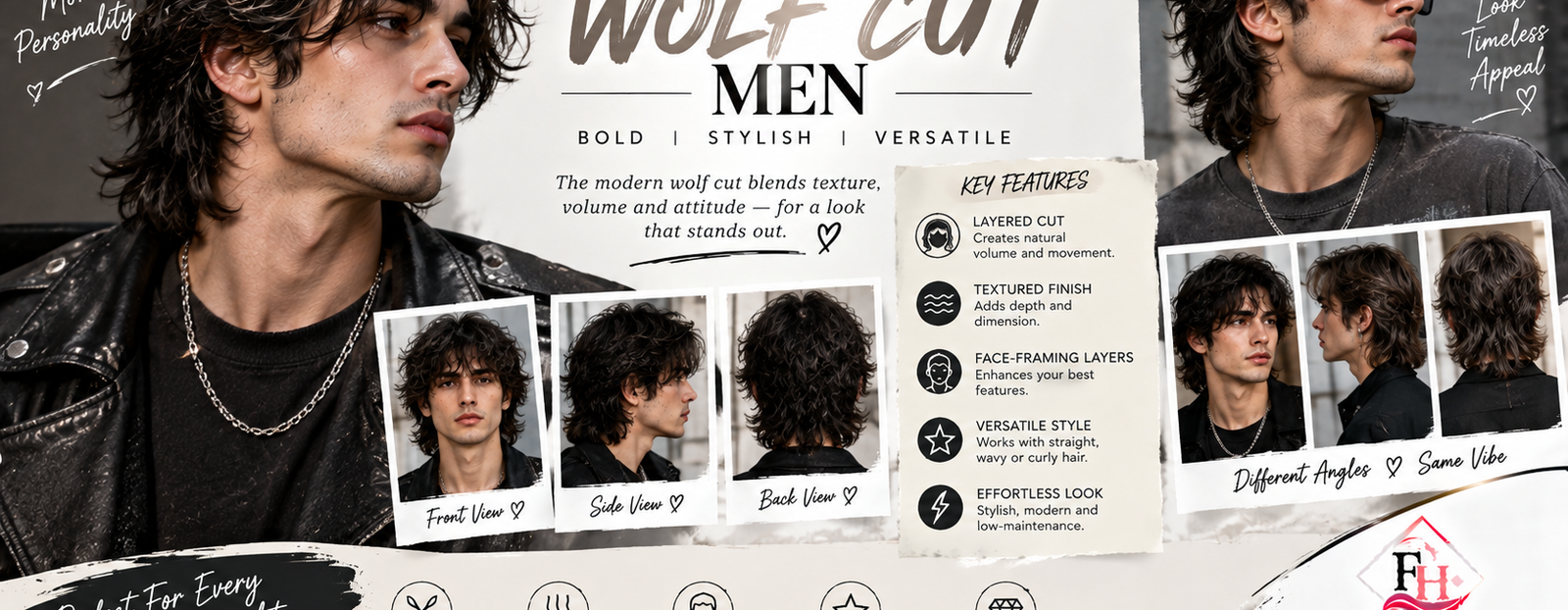
A wolf cut is a layered haircut that blends two classic styles: the 1970s shag and the 1980s mullet. It typically features choppy, textured layers on top, extra volume around the crown, and longer, wispy lengths through the back and sides. The result is intentionally a little messy, but it’s a controlled kind of messy, with a shape built into the cut so it looks good even when you barely style it.
The look has a long history. It started with shaggy 70s layers, picked up its longer back from the mullet era, faded quietly in the 2000s, then returned in the early 2020s through K-pop, K-dramas, TikTok, and Instagram. Today it’s worn by teens, college students, creatives, and professionals alike, which says a lot about how adaptable it has become.
Why the Modern Wolf Cut Is Still Popular
Several things keep the wolf cut relevant right now:
- It works with your natural texture. Straight, wavy, and curly hair can all wear it, and the layers are designed to enhance the movement you already have.
- Styling is simple. Many versions can be done with a wash, an air dry, and a bit of texture spray or cream.
- It’s flexible. You can wear it short and neat for work or grown out and shaggy on weekends.
- It suits many face shapes. Oval faces are often described as the easiest match, and square and diamond shapes tend to look great with it too, while rounder or longer faces do best with a version tailored to them.
Popular Modern Wolf Cut Variations for Men
Classic Wolf Cut
The original version pairs a layered, textured top with longer, flowing ends that flare slightly at the back. It adds natural volume without looking overdone, and it’s the foundation most other variations are built on.
Short Wolf Cut
For guys who like the texture but not the length, the short wolf cut keeps the tops choppy and the sides closer to the head. Shorter proportions around the ears make it easier to maintain, and it’s a good entry point if you’re nervous about growing your hair out.
Wolf Cut With a Fade
This combination pairs a layered, voluminous top with faded sides, and it’s one of the most requested barber styles this year. Low, mid, or high fades all work, depending on how sharp you want the outline. The fade keeps the silhouette clean while the top stays full of movement.
Curly and Wavy Wolf Cut
This style works especially well with natural curl. Lots of layers and a longer fringe let the texture do the work, and styling is often as simple as washing and letting it air dry.
Korean-Style Wolf Cut
Influenced by K-pop and K-drama styling, this is a softer, more refined take where the mullet shape is subtle rather than dramatic. It usually pairs light product use, like a glossing serum on the lengths and a little pomade at the crown, with a polished finish. Heavy matte products can make it look too casual.
Jellyfish Wolf Cut
One of the more experimental trends of the year, the jellyfish wolf cut features a shorter, rounded top layer that sits like a cap over longer sections underneath. The strong contrast between the two levels creates a bold silhouette, so ask your barber for a clear disconnection between layers if you want the effect to read properly.
Long Wolf Cut With a Beard
Longer wolf cuts pair well with a neat beard, especially on narrower faces, where the beard helps balance the extra length. The key is blending the sideburn area softly into the beard so the whole shape looks intentional.
How Long Does Your Hair Need to Be?
You generally need around 3 to 4 inches on top to start, with 5 to 6 inches giving your barber more room to work with layers safely. The sides can stay shorter, especially if you’re going for a fade or short wolf cut version. If you have a receding hairline, a shorter, neater version tends to work better than one with a long, heavy fringe.
What to Tell Your Barber
Being specific saves you from a haircut that misses the mark. When you sit down, try covering these points:
- Bring reference photos that show the exact length and layering you want.
- Say how short you want the sides and whether you’d like a fade.
- Ask for choppy, textured layers on top with volume at the crown.
- Mention your fringe preference, whether that’s long bangs, a curtain fringe, or shorter and textured.
- Explain how much time you want to spend styling, so the layers are cut to match your routine.
How to Style a Wolf Cut at Home
Styling is where the wolf cut really shines, since most people can get a good result with a very short routine:
- Start with damp, not dripping, hair. Styling at this stage gives you the best control over texture.
- Use your fingers to blow-dry. Lift at the roots for volume rather than brushing everything flat.
- Add a texturizing product. A few sprays of texture spray or a bit of styling cream helps define layers and hold the shape.
- Finish with a light serum if your ends look dry or frizzy.
- Refresh between washes. If your roots get oily and flat, a quick dry shampoo can bring back volume this Batiste dry shampoo review breaks down which formulas work best for a fast refresh.
Wolf Cut Maintenance Tips
- Wash with a clarifying shampoo about once a week to remove product buildup.
- Use a hydrating conditioner to keep the layers soft and prevent frizz.
- Deep condition weekly, especially if your hair is curly or wavy, since moisture keeps the texture looking healthy.
- Trim regularly, usually every 6 to 8 weeks, to preserve the layers and shape.
- Protect dyed hair with a sulfate-free shampoo if you’ve added color.
Styling Your Wolf Cut With the Right Outfit
A haircut this expressive works best when your clothes match its energy. The wolf cut has strong roots in street and music culture, so it pairs naturally with relaxed, layered outfits. If you’re weighing how bold to go, this comparison of streetwear vs casual wear can help you decide how much statement your wardrobe should carry alongside the hair. Denim is an easy match too, and this breakdown of bootcut jeans shows one of the silhouettes currently working well with textured, slightly retro looks.
More broadly, the wolf cut fits into the same wave of nostalgic, expressive style covered in fashion trends, where 70s and 80s influences are being reworked into something more wearable. And if you’re still figuring out which trends genuinely suit you, this article on how to find your personal style is a practical way to decide whether a bold cut like this belongs in your look. For warm-weather outfits to pair with it, these summer outfit ideas are a good place to start.
Is the Wolf Cut Right for You?
The wolf cut works best if you like texture, don’t mind a slightly lived-in finish, and want a haircut that does a lot of the work for you. It may be less ideal if you prefer a very sharp, uniform look every day, or if your hair is extremely fine and struggles to hold volume, though a shorter, layered version with a little product can still work. When in doubt, start with a short wolf cut and grow into a longer version once you know you like it.
Final Thoughts
The modern wolf cut has earned its place as one of the defining men’s hairstyles of the moment by being bold without being difficult. Whether you choose a short, clean version with a fade, a soft Korean-inspired cut, or a long shaggy style with a beard, the core formula stays the same: choppy layers, natural volume, and a shape that works with your hair rather than against it. Pick the variation that fits your hair type and lifestyle, be clear with your barber, and keep up with regular trims, and you’ll have a cut that looks effortless with very little effort.
Frequently Asked Questions
What is a wolf cut for men?
A wolf cut is a layered hairstyle that blends the shag and the mullet, with choppy, textured layers on top, plenty of volume at the crown, and longer, wispy lengths through the back and sides.
How long does hair need to be for a wolf cut?
Around 3 to 4 inches on top is the minimum, though 5 to 6 inches gives a barber more room to create layers safely. The sides can stay shorter, especially for fade or short wolf cut versions.
Does the wolf cut work on straight, wavy, and curly hair?
Yes. It works on all three, though it tends to look especially good on hair with some natural wave or curl, since the layers enhance the movement already there.
What face shape suits a wolf cut best?
Oval faces are generally the easiest match, and square and diamond shapes also tend to look great. Round and longer faces usually need a version adjusted to their proportions, so it’s worth discussing with your barber.
How often should I get my wolf cut trimmed?
Trimming roughly every 6 to 8 weeks helps preserve the layers and overall balance of the cut, so the shape doesn’t grow out unevenly.
Can I wear a wolf cut with a fade or a beard?
Yes. A fade keeps the outline clean while the top stays layered and full, and a neatly blended beard works especially well with longer wolf cuts, particularly on narrower faces.