
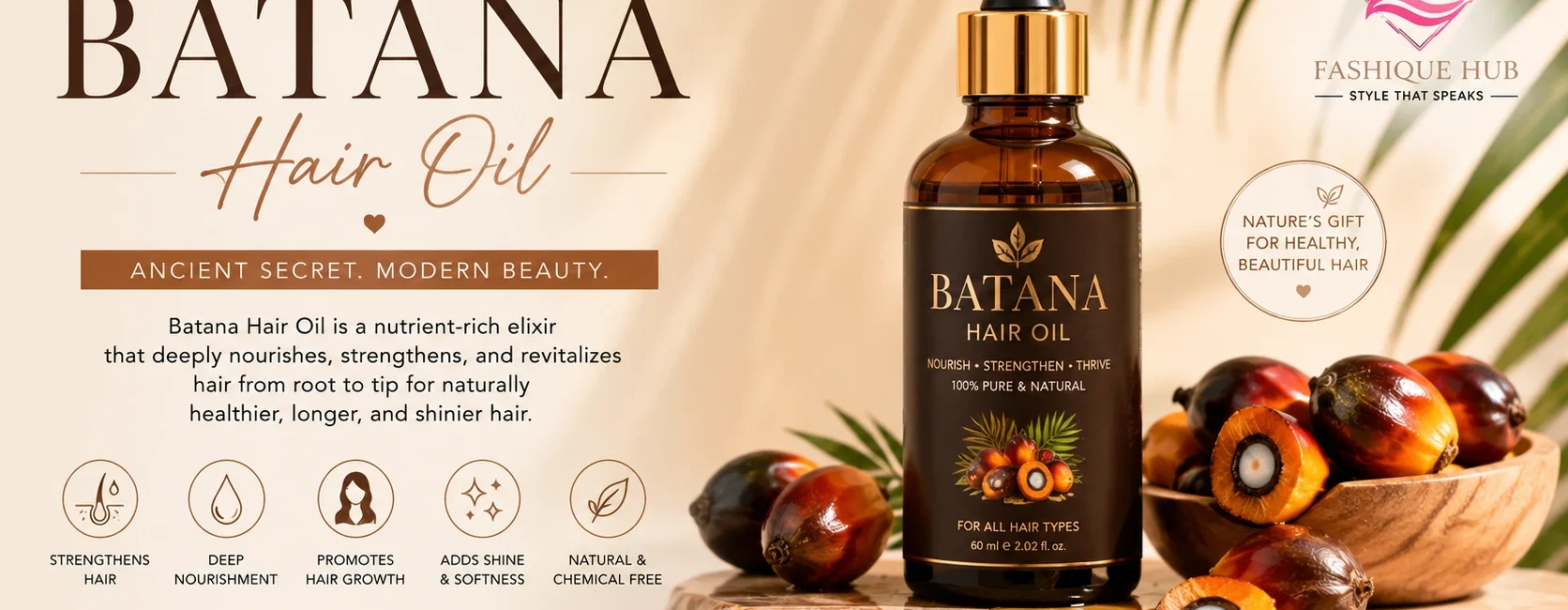
Batana hair oil has taken over hair care conversations across TikTok, Reddit, and beauty forums, and it isn’t slowing down. If you’re trying to figure out what batana oil actually does, whether it’s worth the hype, and how to use it without weighing your hair down.
What Is Batana Hair Oil?
Batana oil is a dense hair oil made from the nuts of the American palm tree, Elaeis oleifera, traditionally used in Honduras for dry, coarse, and damaged hair. It has a long history with the Miskito people of Honduras, who have used it for generations as a scalp and hair treatment long before it became a global trend.
Authentic raw batana oil has a distinct look and smell; it’s dark brown to amber, semi-solid, and has a roasted coffee-like, nutty, earthy scent. If a product labeled “batana oil” is pale yellow and odorless, that’s a red flag that it’s been heavily diluted or isn’t authentic.
What’s Actually in Batana Oil
Part of what makes batana oil different from lighter oils like argan or jojoba is its nutrient density. It’s rich in fatty acids and nutrients like Vitamin E. It may improve hair health by moisturizing, reducing oxidative stress, and strengthening hair follicles, though researchers note that clinical studies on the oil specifically remain limited. Its key constituents include monounsaturated fatty acids like oleic acid, which promote moisture retention and barrier repair, alongside antioxidants and plant sterols.
The Real Benefits of Batana Oil for Hair
Based on both traditional use and the current wave of dermatological and beauty coverage, here’s what batana oil can realistically offer:
1. Deep Moisture for Dry, Damaged Hair
Batana oil’s dense, fatty-acid-rich texture makes it especially effective for thick, curly, coily, or heavily damaged hair, where lighter oils often fail to penetrate the hair shaft fully.
2. Reduced Breakage and Split Ends
For anyone dealing with damage from heat styling or chemical treatments, this is one of the most noticeable effects. The oil’s fatty acid profile helps reinforce the hair’s outer layer, making strands less prone to snapping.
3. Scalp Nourishment
Batana oil contains Vitamin E, a natural antioxidant that helps soothe and moisturize a dry, itchy scalp, and a nourished scalp is generally considered the foundation for healthier hair growth over time.
4. Natural Shine and Frizz Control
Because of its emollient texture, batana oil coats the hair shaft. It smooths the cuticle, which is why so many users report a glass-like shine and noticeably tamer flyaways after consistent use.
5. Mild Antimicrobial and Antifungal Support
Some formulations are also credited with antifungal and antimicrobial qualities that help maintain a clean, healthy scalp, reducing dandruff and scalp irritation. However, this benefit varies depending on the purity and processing of the oil used.
What Batana Oil Cannot Do?
This is the part most viral posts skip, and it matters if you’re deciding whether to buy it for a specific concern. Medical reviewers are clear that there is no strong clinical proof that batana oil can regrow hair, reverse gray hair, or prevent hair loss caused by androgenetic alopecia. Health researchers have gone further, noting that there is zero evidence that batana oil can help reduce or prevent hair loss, even though it does contain compounds broadly associated with stronger, healthier-looking hair.
If regrowth or reversing pattern hair loss is your primary goal, batana oil should be treated as a supportive conditioning product rather than a treatment, and it’s worth ruling out other causes of shedding like hormonal changes, nutrient deficiencies, or thyroid issues with a professional before relying on any topical remedy.
How to Use Batana Oil the Right Way
Batana oil is potent, and using too much or applying it incorrectly is the most common reason people end up with greasy, weighed-down hair instead of the shiny result they wanted.
- Warm a small amount between your palms. Batana oil is semi-solid at room temperature, so warming it slightly makes it easier to distribute evenly.
- Apply to mid-lengths and ends first. Unless you’re specifically treating a dry scalp, start away from the roots to avoid over-oiling.
- Use it as a pre-shampoo treatment. Applying batana oil to dry hair 30 minutes to a few hours before washing lets it penetrate the hair shaft without leaving heavy residue behind.
- Try it as an overnight mask. For very dry or damaged hair, a light overnight application (with a towel or cap to protect your pillow) can maximize absorption.
- Start small. A little goes a long way. Begin with a dime-sized amount and adjust based on your hair’s thickness and porosity.
Batana Oil vs. Other Popular Hair Oils
It’s easy to confuse batana oil with other trending oils, so here’s a quick way to think about where it fits:
- Batana oil vs. rosemary oil: Rosemary oil is more associated with scalp stimulation and is often used specifically to support hair growth, while batana oil leans more heavily into moisture and repair.
- Batana oil vs. argan oil: Argan oil is lighter and better suited for fine or thin hair, while batana oil’s denser texture makes it better for thick, coarse, or coily textures.
- Batana oil vs. castor oil: Castor oil is thicker and stickier, often used specifically on the scalp, while batana oil is more versatile across lengths and ends.
Building a Full Hair-and-Beauty Routine Around It
Batana oil works best as one piece of a broader routine rather than a standalone fix. If you’re already investing in nourishing, natural-leaning beauty products, it’s worth applying the same philosophy to the rest of your routine, reaching for hydrating, skin-friendly formulas the way you would with a Dior lipstick shade built around comfortable, moisturizing wear, or a Guerlain lipstick chosen for its nourishing finish rather than just color payoff.
And if you’re treating batana oil as part of a self-care reset, it pairs naturally with other small upgrades: a fresh Kendra Scott necklace for a simple confidence boost, or a new piece from our Pandora rings guide if you’re building out a whole “treat yourself” moment alongside your hair care routine.
How to Choose a Quality Batana Oil
Because the trend has exploded, the market is now flooded with diluted or synthetic versions. When shopping, look for:
- 100% raw, unrefined batana oil with no added fragrance or filler oils
- Dark brown to amber color; pale or clear oil is a sign of heavy processing
- Semi-solid texture at room temperature, which melts when warmed between the palms
- Clear sourcing information, ideally traceable to Honduras, where the traditional Miskito production method originates
Final Thoughts
Batana oil earns its reputation as a genuinely nourishing, moisture-rich hair treatment, particularly for thick, curly, or damaged hair types. What it isn’t is a proven cure for hair loss or a shortcut to regrowth; the evidence doesn’t support those bigger claims yet. Used correctly, as a conditioning pre-shampoo treatment or occasional overnight mask, it’s a solid, natural addition to a hair care routine built around long-term health rather than instant miracles.
FAQ
Does batana oil regrow hair?
No. There is no strong clinical evidence that batana oil regrows hair or reverses hair loss caused by conditions like androgenetic alopecia. It works best as a moisturizing and conditioning treatment.
Can batana oil be used on all hair types?
Yes, but it’s especially effective for thick, curly, coily, or damaged hair. Fine or thin hair types may find it too heavy unless used sparingly.
How often should I use batana oil?
Most people see the best results using it once or twice a week as a pre-shampoo treatment or overnight mask, rather than daily.
Is batana oil safe for the scalp?
Yes, for most people. Its Vitamin E content and fatty acids can help soothe a dry, itchy scalp, though it’s always worth doing a patch test if you have sensitive skin or allergies.


2 Comments
[…] targeted treatments. On days when your hair needs deeper nourishment beyond a standard wash, our batana hair oil guide covers a dense, nutrient-rich oil treatment that can meaningfully complement a gentler daily […]
[…] effect. On days when your hair needs deeper hydration to counterbalance regular salt spray use, our batana hair oil guide covers a dense, nutrient-rich treatment well suited to restoring moisture between texturizing […]