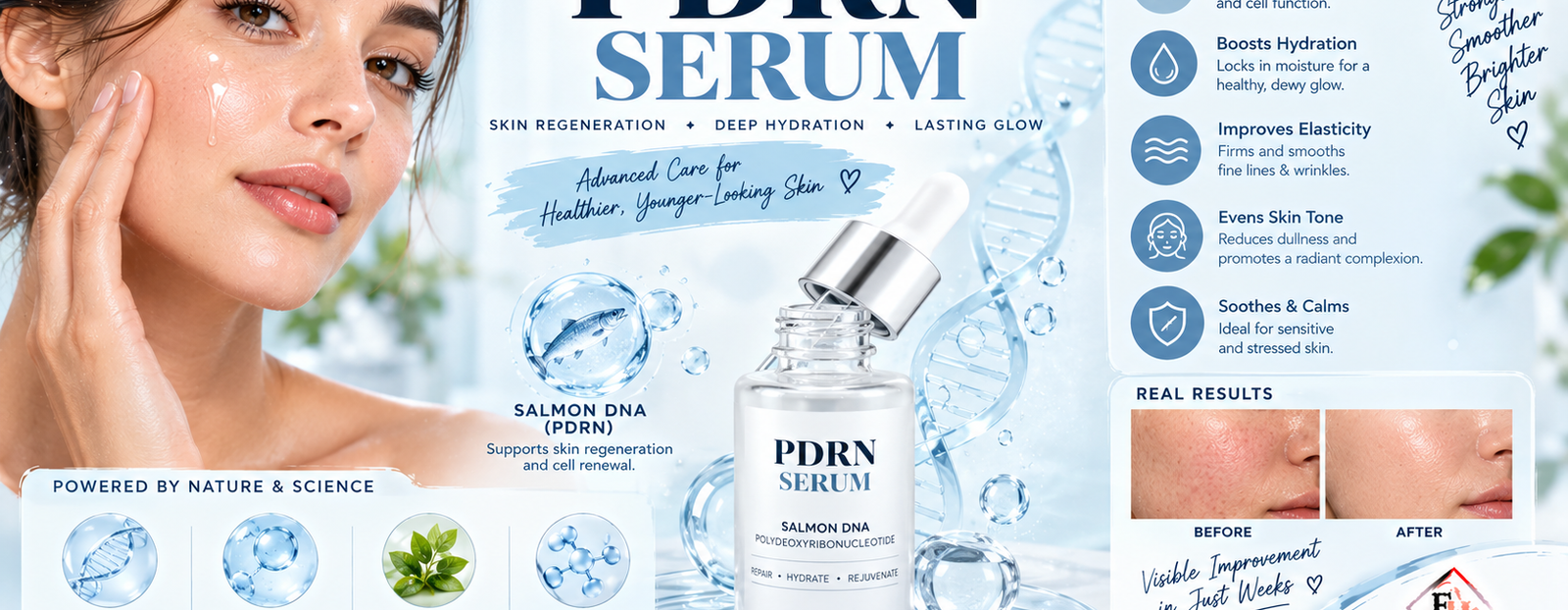
PDRN serums have gone from clinic jargon to a K-beauty shelf staple, usually sold with a promise borrowed from injections skin repair, collagen, a “glass skin” glow. The real picture is more nuanced. PDRN has genuine clinical roots, but most of that evidence comes from injections, not from the serum you’d apply at home. This guide explains what PDRN is, what the evidence says about topical products, what you can realistically expect, who should be careful, how to use a serum, and what to check on the label before you buy.
The Short Version
- What it is: PDRN (polydeoxyribonucleotide) is a mixture of DNA fragments, typically from salmon or trout, used in some clinic treatments.
- The evidence gap: The strongest evidence is for injections. Evidence that a topical serum delivers similar effects is limited.
- A fair expectation: Hydration, comfort, and a smoother look, not injection-level results.
- Safety: Topical use is generally considered low risk, but patch test first, especially with a fish allergy.
What Is PDRN?
PDRN is a purified mixture of low-molecular-weight DNA fragments, commonly extracted from the sperm cells of salmon trout or chum salmon. Researchers describe the fragments as ranging from about 50 to 2,000 base pairs, and commercially available PDRN is typically derived from salmon testes. It’s believed to work by activating the adenosine A2A receptor and by supporting nucleotide “salvage pathways,” which cells use to recycle DNA building blocks, giving it anti-inflammatory and regenerative effects in the contexts studied.
You may also see it called salmon DNA, and some ingredient lists use the name sodium DNA, though labeling varies, so check the product.
Where the Strong Evidence Comes From: Injections
The clinical credibility of PDRN rests largely on injectable use. One frequently cited area is wound healing, such as a trial in which injected PDRN accelerated healing of diabetic foot ulcers. In aesthetics, in-clinic treatments using injected polynucleotides, such as Rejuran and Nucleofill, are used for skin quality and recovery, and these are the protocols with the strongest evidence base. Injectables of this kind are popular abroad but are not FDA-approved for cosmetic use in the US, according to one guide.
Does PDRN Serum Work?
This is the question most pages dodge, so here’s the honest summary:
- Skin barrier crossing is the problem. An injection places material below the skin’s surface, while a serum has to get through the outer barrier. Evidence that enough intact PDRN reaches the dermis from a dropper product is sparse.
- Benefits may come from the formula, not the PDRN. A Dermatology Times review of the topic notes that improvements people attribute to topical PDRN are more plausibly driven by humectants and barrier-repair ingredients in the base. One dermatologist quoted by a skincare site said they doubted these products do much beyond moisturizing.
- There’s one encouraging study, with a caveat. A late-2025 clinical study on low-molecular-weight peony-derived PDRN reported improved skin elasticity around the eyes after four weeks of topical use. Dermatology Times described it as the first published topical clinical evidence for any form of PDRN, and noted that plant-derived analogs are a different category from salmon-derived PDRN. It’s a promising, early result, not proof that salmon-based serums work the same way.
- The honest bottom line: A PDRN serum is plausibly a good hydrating, soothing product, and the PDRN itself might add something, but injection-equivalent results aren’t supported.
What You Can Realistically Expect
| Claim | Realistic Take |
|---|---|
| Hydration and plumpness | Likely, especially from humectants in the formula |
| Soothing and comfort | Plausible, particularly in barrier-focused formulas |
| Smoother texture | Possible over several weeks |
| Reduced wrinkles or scar depth | Not established for topical products |
| Collagen remodeling like an injection | Not supported by current evidence |
| Faster recovery after procedures | Something to discuss with your clinician, not assume |
PDRN Serum Ingredients: What to Look For
PDRN is rarely used alone, so the rest of the ingredient list matters as much as the PDRN itself:
- Hyaluronic acid or glycerin: Humectants that deliver most of the immediate hydration.
- Niacinamide: Often added for tone and barrier support.
- Centella asiatica, panthenol, or ceramides: Soothing and barrier-focused ingredients that suit the repair positioning. Our guide to centella-based sunscreens explains why centella is so popular in K-beauty.
- Peptides: Frequently paired for firmness claims.
- Fragrance and essential oils: Worth avoiding if your skin is reactive.
Label tips:
- Look for PDRN or sodium DNA on the list and notice where it sits. Ingredients are listed in descending order of concentration.
- Be wary of vague percentages. Concentrations aren’t standardized, and brands don’t always disclose them, so compare transparency, not just marketing language.
- Check whether it’s salmon- or plant-derived, especially if you’re vegan or have a fish allergy. Plant-based alternatives, like peony-derived PDRN, exist, but there’s no direct evidence that they outperform salmon-derived versions.
- Skip “injection-like results” claims, which the evidence doesn’t support.
Who Should Be Careful
- People with a fish or seafood allergy. Most PDRN comes from salmon or trout. For topical serums, reactions appear uncommon, but patch test first and ask a clinician if your allergy is severe. For injectables, a confirmed anaphylactic fish or shellfish allergy is considered a contraindication.
- Pregnant or breastfeeding people. Ask your doctor before using new active skincare.
- Anyone with very reactive or broken skin, since added fragrance or other actives in the formula can irritate.
- People planning clinic treatments, who should ask their provider how to use a serum around procedures.
How to Use a PDRN Serum
- Patch test on your inner arm or jaw for a few days.
- Cleanse first. Our review of the CeraVe Foaming Facial Cleanser covers a simple, gentle cleansing option.
- Apply to clean, slightly damp skin, using a few drops.
- Follow with moisturizer to seal in hydration.
- Use sunscreen in the morning. It’s the most important anti-aging step regardless of serums.
- Be patient. Topical results, if any, are gradual, so judge over at least four weeks.
Layering notes: Hydrating serums generally pair easily with hyaluronic acid, niacinamide, and peptides. If you use stronger actives, introduce them one at a time. For example, anyone using medicated cleansers like those in our guide to benzoyl peroxide face washes should add new products gradually to avoid irritation. If you want to address the eye area specifically, our roundup of the best eye creams for dark circles explains which ingredients target which concerns.
How Much Does PDRN Serum Cost?
Topical PDRN products are typically sold at accessible price points. One guide estimates roughly $9 to $30 per product, far less than an in-clinic injection session. Prices vary by brand and size, so compare ingredient lists, not just price.
PDRN Serum vs Other Serums
| Serum | Main Role | Evidence Base |
|---|---|---|
| PDRN serum | Soothing, hydrating, repair-focused | Limited for topical use; stronger for injections |
| Hyaluronic acid | Surface hydration | Well established |
| Niacinamide | Tone, barrier, oil balance | Well established |
| Retinol | Texture, lines, tone | Extensive evidence for photoaging |
| Vitamin C | Brightening, antioxidant | Well established |
If your goal is clear, such as anti-aging, retinol has a much deeper topical evidence base than PDRN.
Common Mistakes
- Expecting injection-level results from a serum.
- Buying on the “salmon DNA” claim alone without checking the rest of the formula.
- Ignoring a fish allergy.
- Skipping sunscreen.
- Layering too many new actives at once.
- Giving up too soon, or expecting overnight changes.
Final Thoughts
PDRN serum is best thought of as a promising, well-marketed hydrating and soothing product, not a replacement for clinical treatment. The molecule has credible repair biology and strong injectable evidence, and early plant-derived research is interesting, but there’s little to show that a standard salmon-based serum matches injection results. If it sounds appealing, choose a gentle, fragrance-free formula you’d be happy to use even if the PDRN does nothing extra, and pair it with daily sunscreen.
FAQ
What is PDRN in skincare?
PDRN (polydeoxyribonucleotide) is a mixture of DNA fragments, commonly derived from salmon or trout, used in some clinical treatments and now added to serums and creams.
Does PDRN serum work as well as injections?
There’s no good evidence that it does. Injections deliver material below the skin barrier, while topical products must cross it, and benefits from serums are more plausibly due to hydrating and barrier-supporting ingredients.
Is PDRN serum safe if I have a fish allergy?
Topical reactions appear uncommon, but because most PDRN comes from salmon or trout, patch test first and ask a clinician if your allergy is severe. A confirmed anaphylactic fish allergy is a contraindication for injectable versions.
How long does PDRN serum take to work?
Topical changes, if any, are gradual, so judge a product over at least four weeks while using sunscreen daily.