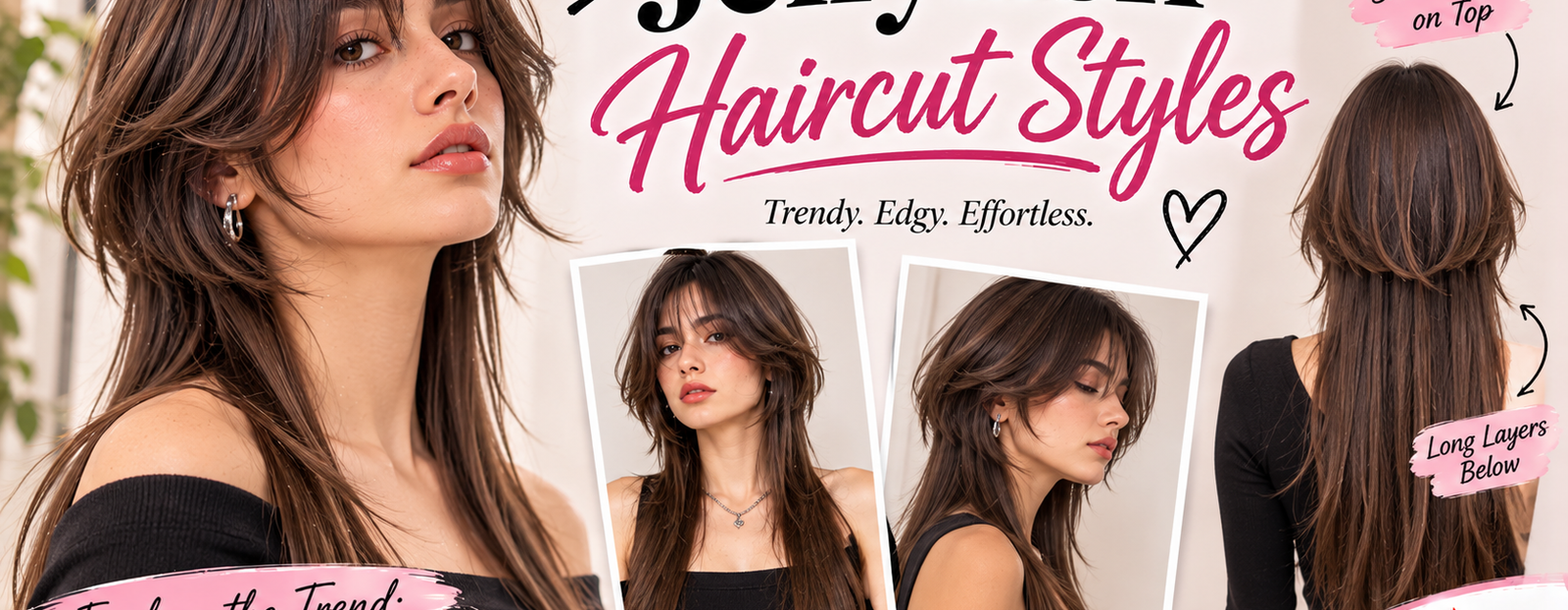
A jellyfish haircut doesn’t blend in, and that’s the entire point. Where most layered cuts work to disguise the transition between lengths, this one deliberately leaves a visible step, a short, blunt tier up top dropping straight into long, flowing layers underneath. It looked like a passing TikTok novelty when it first surfaced, but after Miley Cyrus, Billie Eilish, and Lady Gaga each wore their own version of it on the same Grammys red carpet, it became clear this cut has real staying power. Here’s exactly what a jellyfish haircut is, the one technical detail that separates it from a wolf cut or mullet, every major variation worth knowing, and how to actually style and maintain one once you’ve committed.
What Is a Jellyfish Haircut?
A jellyfish haircut is a two-tiered style built from intentional contrast. The top forms a short, blunt bob or crop that sits close to the head, while underneath it, long, disconnected layers fall freely, often reaching well past the shoulders. The name comes from the visual effect: the rounded top section resembles a jellyfish’s bell, and the long strands underneath mimic its trailing tentacles.
The style borrows from two very different references. It takes its rounded, face-framing structure from the hime cut, a traditional Japanese style known for sharp, geometric layers, and it borrows its dramatic length contrast from the modern mullet. The result is more sculptural and structured than either source on its own.
The One Detail That Defines a True Jellyfish Cut
This is the part most explanations gloss over, and it’s the single most useful thing to understand before you book an appointment: a jellyfish haircut does not blend. If you run your finger down the length of the hair and feel a clean step rather than a gradual taper, that’s a jellyfish cut. If you feel no step at all, what you actually have is closer to a wolf cut.
A wolf cut graduates from short layers at the crown into progressively longer lengths, so every section has a neighboring length close to it. A jellyfish cut skips that gradual blending entirely. It changes length abruptly, along one clean horizontal line, creating two distinct tiers rather than one continuously layered shape. If you’re searching for modern wolf cut inspiration and keep landing on jellyfish photos instead, this is the distinction to keep in mind, and vice versa, since stylists sometimes use the terms loosely even though the cuts are technically different.
Jellyfish Haircut Variations Worth Knowing
Classic Blunt-Bob Jellyfish
The original version of the cut: a sharp, blunt bob on top transitioning into long, straight layers below. This is the most recognizable take and the one most people picture when they hear “jellyfish haircut.”
Jellyfish Bob With Face-Framing Bangs
Adding curtain or face-framing bangs to the top tier brings more softness to the style while keeping the dramatic underlayer fully intact. This version tends to feel slightly less severe than the classic blunt version.
Micro-Bang Jellyfish
Blunt, short micro bangs push the look toward a more editorial, graphic aesthetic. This variation reads as high-fashion and intentional rather than soft or romantic, and it tends to suit oval or heart-shaped faces particularly well, since the short bangs draw attention toward the center of the face.
Curly Jellyfish Haircut
Curly and coily textures add an entirely new dimension to the cut. The top layer forms a rounded, voluminous crown of natural curls, while the longer bottom section continues the same curl pattern downward. Because natural texture alone creates visible separation, a curly jellyfish doesn’t always need razor-sharp lines to read clearly as the style, though the layers still need to be cut specifically to allow for natural shrinkage so the tiers don’t collapse into each other.
Two-Tone and Color-Blocked Jellyfish
One of the most popular ways to amplify the cut’s contrast is through color. A clean color block, like a copper top layer fading into a brunette underlayer, or platinum blonde paired with ginger, visually reinforces the step between tiers and makes the silhouette read even more dramatically.
Pixie-Top Jellyfish
An especially bold take that pairs a cropped, pixie-length top tier with dramatically long layers underneath. The extreme length difference makes the jellyfish silhouette as pronounced as the cut gets.
Sleek, Polished Jellyfish
Both tiers are flat-ironed pin-straight with a razor-clean disconnection line between them. This is the most editorial, high-fashion version of the cut, intentional and graphic rather than soft or undone.
Jellyfish With a Braided Underlayer
Braiding the longer bottom section, particularly with small bubble braids, mimics the segmented look of real jellyfish tentacles and adds a playful, textured detail to the cut.
Jellyfish Haircuts for Men
The style translates into menswear by leaning on stronger, squared-off lines and varying how dramatic the length contrast is.
Jellyfish fade. A short, textured top paired with a hard, dramatic undercut through the sides and back creates a sharp disconnect before the hair lengthens into a shaggy tail underneath.
Long-top fade. A pompadour-style top sits over a shorter, faded base, producing a more subtle version of the two-tier effect that works well for anyone easing into the style.
Shaggy mullet jellyfish. Keeping the top section short while letting the back grow out into a textured, shaggy length creates a look that’s edgy but still easy to style day to day. If you’re drawn to this more relaxed, shaggy direction, it’s worth comparing notes with a modern wolf cut for men, since the two styles share a similar textured, lived-in energy even though their underlying structure differs.
Which Face Shapes Suit the Jellyfish Haircut
| Face shape | What works | Why |
|---|---|---|
| Round | Asymmetrical or diagonal top layers | Diagonal lines draw the eye vertically, which helps downplay roundness |
| Square | Softer, slightly textured top layer rather than razor-blunt edges | Softer lines help ease the strength of a square jawline |
| Oval and heart | Micro bangs or blunt fringe | Short bangs draw attention toward the center of the face, which suits these shapes particularly well |
| Heart | Shorter, lighter top layers at the front | Helps soften a wider forehead |
Is the Jellyfish Haircut Right for Your Hair Type?
Straight to wavy hair shows off the cut most clearly, since the sharp lines and dramatic length drop are easiest to see against smoother textures. That doesn’t rule out curly or coily hair at all. The trick for curlier textures is leaving slightly more length and volume at the top tier so natural shrinkage doesn’t erase the visual separation once the curl pattern sets, and using the texture itself, rather than a sharp blunt line, to create the contrast between sections.
How to Get a Jellyfish Haircut: What to Tell Your Stylist
This cut depends heavily on precision, so choosing the right stylist matters more than usual.
- Find a stylist experienced with avant-garde, graphic cutting, not just classic layering techniques, since the disconnected structure requires a different cutting approach than a standard layered cut.
- Bring clear reference photos showing the exact length you want for both the top tier and the bottom layers.
- State the top length specifically, in inches or clipper-guard numbers for very short versions, so there’s no ambiguity about where the disconnection line should sit.
- Ask for a clean, deliberate disconnection, not a blended transition, and confirm your stylist understands you want a visible step rather than a gradual taper.
- Discuss face-framing details upfront, including whether you want bangs, and how they should interact with the top tier.
How to Style a Jellyfish Haircut at Home
Styling is where the cut’s contrast either comes to life or falls flat, so a single, uniform styling pass across both tiers tends to make the whole look read as flat rather than dynamic.
- Style each tier separately. Because the cut is built from two distinct lengths, treating both sections identically erases the visual separation that makes the style work in the first place.
- Use a flat iron on the top tier for a sleek, polished finish, then let the bottom layer move more freely, whether that’s natural texture, loose waves, or a different finish entirely.
- Try a texture contrast. Sleeking the top layer while leaving the bottom section in loose, beachy waves creates a yin-yang effect where both tiers stand out against each other.
- Round-brush the ends of the bottom layer and let them cool completely in position before releasing, since hair sets into whatever shape it holds as it cools, which locks in curl or flip more effectively than styling and moving on immediately.
- Try heatless methods for the lower tier. Braiding the longer layers overnight or setting them with foam rollers creates soft, defined waves without heat damage, while still preserving the sharp top tier.
- Use curl-defining products on curly versions. A leave-in conditioner or curl cream helps each tier hold its shape and keeps the contrast between sections from frizzing together into one undefined mass.
Can You Put a Jellyfish Haircut Up?
Only partially. Because the cut relies on a visible length difference, pulling all of it into one ponytail erases the entire point of the style. A more effective approach is styling the long bottom layer into a low ponytail or bun while leaving the short top tier down and loose, which creates two distinct looks in one: the full jellyfish silhouette when your hair is completely down, and a framed, bob-like effect around the face when the lower section is tied back.
Jellyfish Haircut Maintenance
| Factor | What to expect |
|---|---|
| Trim frequency | Every 6 to 8 weeks to keep the disconnection line sharp and prevent it from blending out as hair grows |
| Color upkeep | Two-tone and color-blocked versions require more frequent root touch-ups to maintain a crisp color line |
| Growing it out | The step between tiers softens naturally over time; most people either commit to regular trims or transition the cut into a blended style once they’re ready for a change |
| Daily styling time | Low to moderate for straight and wavy hair; slightly higher for curly versions that need product to define each tier separately |
Final Thoughts
A jellyfish haircut rewards anyone who wants their hair to make a statement rather than quietly blend into the background. The defining rule is simple even if the execution isn’t: a real jellyfish cut holds a clean, visible step between a short top tier and long, flowing layers underneath, rather than the gradual blending you’d find in a wolf cut or classic shag. Whether you go for the sleek, editorial version, a curly textured take, or a bold two-tone color block, the key to making the style work is treating both tiers as genuinely separate elements, in the cut itself and in how you style it day to day.
Frequently Asked Questions
What’s the difference between a jellyfish haircut and a wolf cut?
A jellyfish cut holds a clean, visible step between a short top tier and long layers underneath, with no blending between the two lengths. A wolf cut graduates gradually from short crown layers into progressively longer ends, so there’s no abrupt disconnection anywhere in the cut.
Does a jellyfish haircut work on curly hair?
Yes. Curly and coily textures add natural dimension to the style, though the layers need to be cut with extra length at the top to account for shrinkage once the curl pattern sets. Texture alone can create visible separation between tiers without needing a razor-sharp line.
How often do you need to trim a jellyfish haircut?
Roughly every 6 to 8 weeks. The cut’s defining feature is its sharp disconnection, and regular trims keep that line crisp rather than letting it soften and blend out as your hair grows.
Can men get a jellyfish haircut?
Yes. Men’s versions typically lean on stronger, squared-off lines and variations like a jellyfish fade, a long-top fade, or a shaggy mullet-inspired take, each adjusting how dramatic the contrast between the top and bottom sections is.
What face shape suits a jellyfish haircut best?
Round faces benefit from asymmetrical or diagonal top layers, square faces look best with a slightly softer top layer rather than razor-blunt edges, and oval or heart-shaped faces are flattered by micro bangs or a blunt fringe.
Can you wear a jellyfish haircut in a ponytail?
Only partially. Pulling the entire cut into one ponytail erases the length contrast that defines the style. A better option is tying back just the long bottom layer while leaving the short top tier down, which creates a framed, bob-like effect while your hair is up.
Why does my jellyfish haircut look flat no matter how I style it?
This usually happens when both tiers are styled the same way, since the cut relies on visible contrast between the two sections. Styling the top and bottom layers differently, whether through texture, finish, or a heat tool, restores the separation that makes the cut read clearly.