
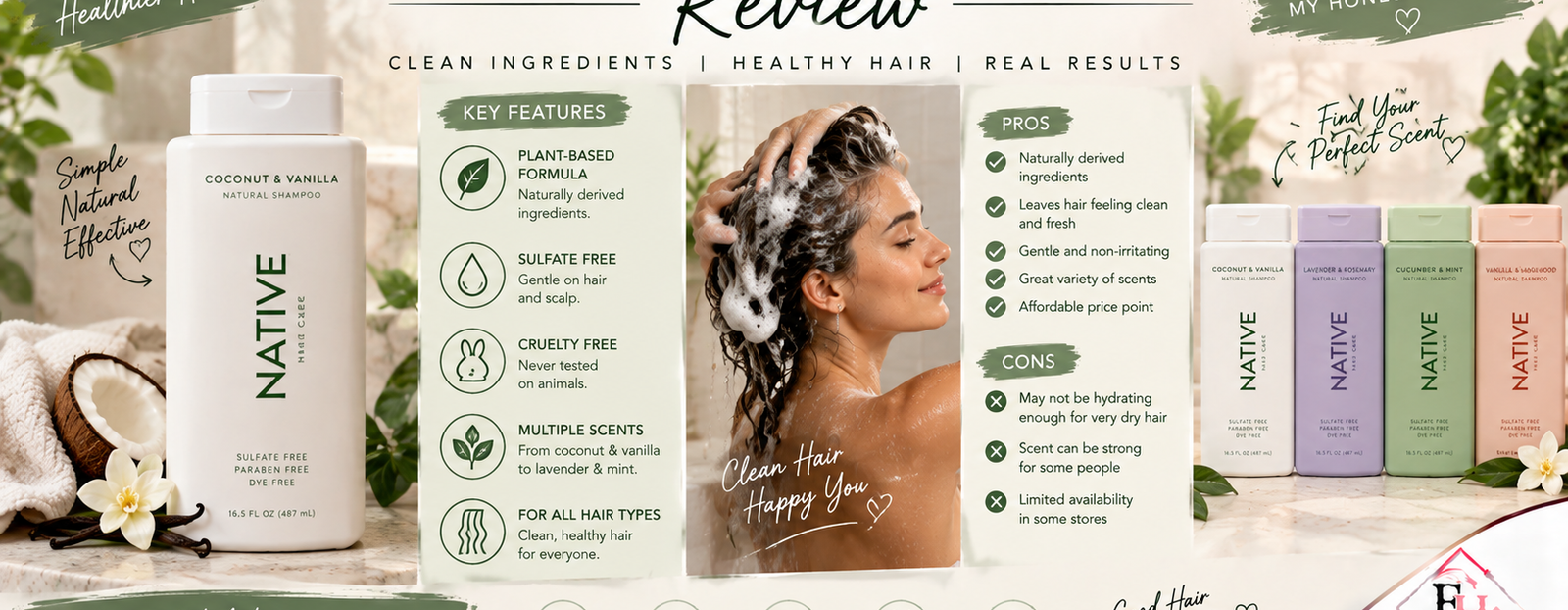
Native has become one of the most recognizable names in the “clean beauty” hair care aisle, instantly identifiable by its simple white bottles and short, transparent ingredient lists. But does the minimalist approach actually translate into genuinely good hair care, or is “clean” doing more marketing work than formulation work? This guide breaks down exactly what’s in Native Shampoo, how it performs across different hair types, and the real pros and cons worth knowing before you buy.
What Is Native Shampoo?
Native was founded in 2011 as an independent direct-to-consumer startup, built around the idea of offering personal care products with fewer, more transparent ingredients. Procter & Gamble acquired the brand by the end of 2017, giving it significantly wider retail distribution while the company kept its original minimalist branding and formulation philosophy intact.
The brand’s core promise centers on the phrase “thoughtfully made with clean ingredients,” reinforced by a transparency chart printed on the back of every bottle that describes what each ingredient does. Native shampoos are sulfate-free, silicone-free, paraben-free, and cruelty-free, and the brand offers several distinct lines tailored to different hair needs: moisturizing, volumizing, strengthening, curl care, and a daily clean option, making it genuinely easier to find a formula suited to your specific hair type rather than a single one-size-fits-all product.
Breaking Down the Ingredients
Understanding what’s actually in the bottle is the most useful way to evaluate whether Native lives up to its clean-formula reputation.
The Core Cleansing Agents
Native relies on a combination of gentle, sulfate-free surfactants rather than the harsher sulfates found in many traditional shampoos. Sodium cocoyl isethionate is a coconut-derived cleansing agent shown to be safe and effective in a medical review published in the International Journal of Toxicology, while lauramidopropyl betaine, also coconut-derived, functions as a natural, non-toxic cleansing ingredient that also acts as a foam booster and conditions hair as it cleanses. Depending on the specific formula, you may also find decyl glucoside, a gentle sugar-based cleanser often used in baby shampoos, working alongside these primary surfactants to create a cleanse strong enough to remove buildup without stripping the ends.
Conditioning and Texture Ingredients
Polyquaternium-10 gives hair slip and helps with detangling without relying on silicones, while guar hydroxypropyltrimonium chloride helps smooth frizz and improve overall manageability. Panthenol, also known as pro-vitamin B5, is included specifically to moisturize hair and improve its elasticity.
Botanical Extracts and Oils
Depending on the specific line, Native includes ingredients like castor oil, coconut extract, or shea butter. It’s worth setting realistic expectations here: these botanical additions are generally present at concentrations too low to dramatically transform your hair’s condition, functioning more for softness and scent than deep repair, though they’re not without any benefit at all.
The Ingredients Worth Knowing About
Not every ingredient in Native’s formula is universally praised. The shampoo contains fragrance, which isn’t ideal for anyone with sensitive skin or fragrance sensitivities, even though the specific fragrance used is formulated without phthalates. Sodium benzoate, a preservative also present in some formulas, can be irritating to skin for certain users. Because of these two ingredients specifically, at least one health-focused review outlet has stated they don’t currently recommend the product for people prioritizing a completely fragrance-free or irritant-free routine.
Does Native Shampoo Cause Hair Loss?
This is one of the most commonly searched questions about the brand, and the science-backed answer is reassuring: there is no scientific evidence that Native shampoo directly causes hair loss. The core ingredients including cocamidopropyl betaine, sodium lauroyl sarcosinate, and citric acid are considered safe and are widely used throughout the hair care industry. That said, individual sensitivities to a specific fragrance or ingredient can occur, and if you’re noticing excessive shedding after switching shampoos, it’s worth speaking with a healthcare provider or dermatologist to rule out other underlying causes rather than assuming the shampoo itself is responsible.
What Real Customers and Reviewers Say
Customer sentiment on Native Shampoo is largely positive across major retail platforms. On Walmart, reviewers frequently praise the shampoo’s ability to clean hair without drying it out, its pleasant, non-overpowering coconut and vanilla scent, and its gentle formula for those prone to noticing extra shedding during hair washing. Several reviewers specifically highlighted enjoying the transparency of the short ingredient list and reported soft, manageable, shiny hair after regular use.
Independent testing has echoed much of that sentiment. One in-depth reviewer who tested the product over two weeks described it as doing a decent job cleansing hair without stripping it, while another dedicated barber review noted the shampoo lathers well and provides a gentle cleaning of the hair and scalp. A separate hair-focused outlet concluded that Native’s hair products are probably a better fit for those with thick and/or frizzy hair specifically, suggesting the formula may perform somewhat differently depending on your particular hair texture.
Native Shampoo Pros and Cons
Pros
- Short, transparent ingredient list with an in-bottle chart explaining what each ingredient does
- Sulfate-free, silicone-free, and paraben-free formulation
- Multiple lines available for different hair needs, including moisturizing, volumizing, strengthening, and curl care
- Gentle cleansing that reviewers consistently describe as effective without feeling stripping
- Low price point with strong value, since a little product tends to go a long way
- No scientific link to hair loss, based on the safety profile of its core ingredients
- Widely available, sold at major retailers as well as directly through the brand’s own site
Cons
- Contains fragrance, which may not suit those with sensitive skin or fragrance sensitivities
- Includes sodium benzoate in some formulas, a preservative that can be irritating for certain users
- Botanical extracts are present in low concentrations, meaning they contribute more to scent and softness than significant, deep hair repair
- “Clean” is a somewhat subjective marketing term, and some reviewers have noted chatter around a class-action lawsuit involving PFAS (“forever chemicals”) that are common across many personal care products industry-wide
- May work better for thick or frizzy hair than for very fine or already low-volume hair types
Choosing the Right Native Shampoo Line for Your Hair
- Fine or oily hair: The Daily Clean or Volumizing line tends to avoid weighing hair down the way heavier moisturizing formulas can.
- Dry, damaged, or color-treated hair: The Moisturizing or Strengthening lines are specifically formulated to add hydration and support without harsh sulfates that can strip color.
- Curly hair: Native’s dedicated Curl Care line is built specifically around the needs of curl pattern and definition.
- Thick or frizzy hair: Independent testing suggests Native’s formulas tend to perform especially well for this hair type, offering effective cleansing alongside frizz control.
- Sensitive skin or fragrance-sensitive users: Given the presence of fragrance and sodium benzoate in most formulas, it’s worth doing a patch test or consulting a dermatologist before committing to regular use if you have a history of reactive skin.
How Native Compares to Other Clean Shampoo Brands
Native’s core value proposition a short ingredient list, sulfate-free formulation, and accessible retail pricing puts it in a genuinely competitive position within the broader “clean” hair care category, especially compared to pricier boutique or salon-exclusive sulfate-free brands. The tradeoff is that Native’s botanical additions are generally lighter-touch than what you’d find in a more concentrated, treatment-focused formula, positioning it as a genuinely solid daily maintenance shampoo rather than an intensive repair treatment.
Building a Complete Hair Care Routine
Native Shampoo works well as the foundation of a broader hair care routine, especially when paired with more targeted treatments. On days when your hair needs deeper nourishment beyond a standard wash, our batana hair oil guide covers a dense, nutrient-rich oil treatment that can meaningfully complement a gentler daily shampoo like Native. For anyone stretching time between wash days, our Batiste dry shampoo guide covers the best formulas for refreshing hair without a full wash, rounding out a complete, low-irritation hair care rotation.
Final Thoughts
Native Shampoo largely lives up to its reputation as a gentle, transparent, sulfate-free option that genuinely cleanses without stripping hair, backed by a formula built on well-studied, coconut-derived surfactants and reasonable added conditioning ingredients. It isn’t a miracle product its botanical extracts are present in modest amounts, and its inclusion of fragrance and sodium benzoate means it isn’t the right fit for everyone with sensitive skin but as an accessible, widely available daily shampoo, it holds up well against both customer reviews and closer ingredient scrutiny from independent reviewers and medical professionals alike.
FAQ
Does Native Shampoo cause hair loss?
No there is no scientific evidence linking Native Shampoo’s ingredients to hair loss. Its core surfactants are widely used and considered safe throughout the hair care industry, though individual sensitivities to specific ingredients are always possible.
Is Native Shampoo good for color-treated hair?
Yes Native states its shampoos are safe for all hair types, including color-treated and dry, damaged hair, and the sulfate-free formulation is generally gentler on color than traditional sulfate-based shampoos.
What hair type does Native Shampoo work best for?
Independent reviews suggest Native’s formulas tend to perform especially well for thick and/or frizzy hair, though the brand offers separate lines for moisturizing, volumizing, strengthening, and curly hair needs.
Does Native Shampoo contain sulfates or parabens?
No Native Shampoo is formulated without sulfates, silicones, or parabens, though most formulas do contain fragrance and some contain the preservative sodium benzoate.

2 Comments
[…] comes with regular styling. On wash days, a gentle, transparent formula like the one covered in our Native Shampoo review helps fully clear wax residue without over-stripping your hair. If you’re using wax […]
[…] exploring plant-based and “clean” personal care brands more broadly, our in-depth Native Shampoo review covers a similarly positioned brand with its own transparent ingredient breakdown, useful for […]