
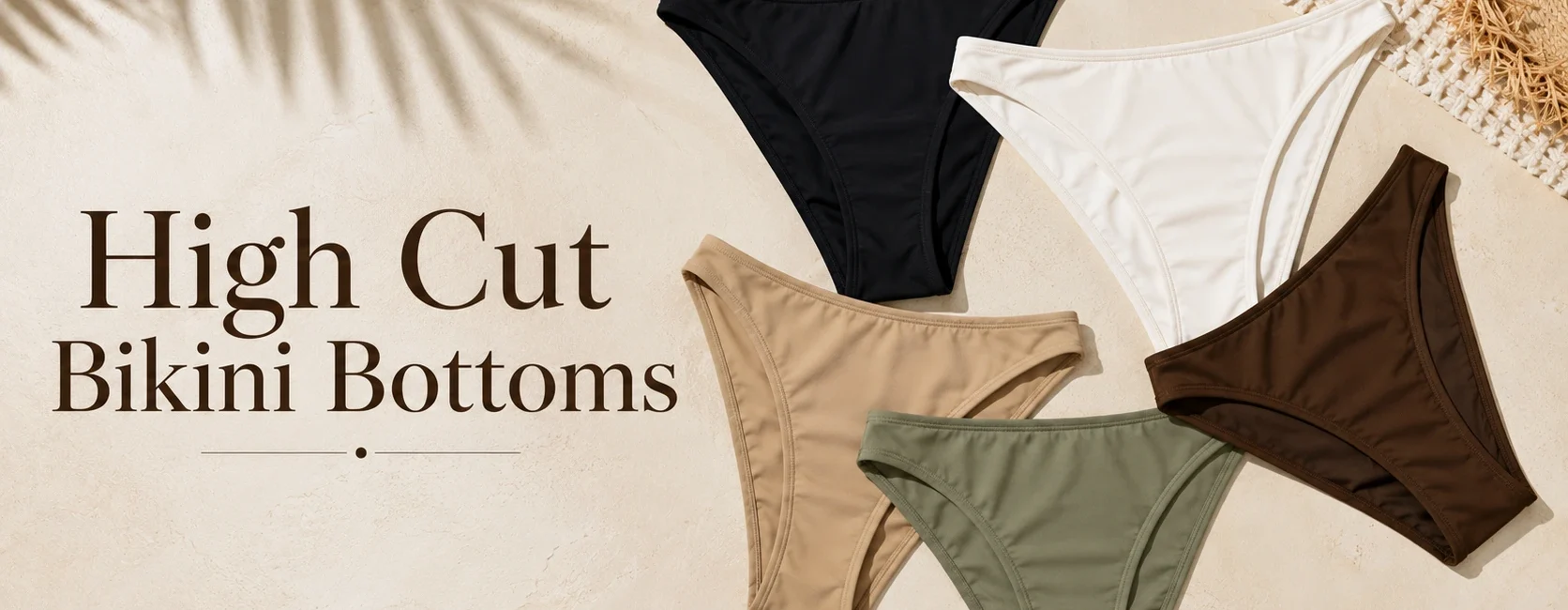
If there’s one bikini bottom style that keeps dominating swimwear searches every single summer, it’s the high-cut bikini bottom. Also called high-leg bottoms, this style is famous for its deep, upward-angled leg openings that sit higher on the hip than a classic brief, creating one of the most leg-lengthening, waist-defining silhouettes in swimwear.
What Are High Cut Bikini Bottoms?
High cut bikini bottoms are swim bottoms with leg openings that curve upward and outward toward the hip bone, rather than sitting straight across like a classic brief. This upward angle visually elongates the leg and narrows the hip line, which is exactly why the style became a runway and red-carpet favorite before crossing over into everyday swimwear.
The “high cut” refers specifically to the leg line, not the waistband. That’s an important distinction, because it means high cut bottoms can come in multiple rise options:
- Low-rise high cut — sits below the navel with a dramatic leg cut
- Mid-rise high cut — sits at or just above the navel, the most universally worn version
- High-waisted high cut — combines a high leg with a high waistband for a retro, hourglass-defining look
High Cut vs. Classic vs. Cheeky vs. Brazilian: What’s the Difference?
People often confuse high cut with cheeky or Brazilian bottoms, but they solve different problems:
- Classic brief — moderate rear coverage, straight leg line, universally flattering, minimal drama
- High cut — deep upward leg curve, moderate-to-full rear coverage depending on the brand, leg-lengthening focus
- Cheeky — moderate rear exposure with a straighter leg line than high cut
- Brazilian — minimal rear coverage and a very high leg cut, the most dramatic version of the leg-baring silhouette
The key thing to understand is that high cut is primarily about the leg line, while cheeky and Brazilian are primarily about rear coverage. You can actually find high cut bottoms with full rear coverage; they have a higher leg opening than a classic cut. That’s what makes this style so versatile: you get the lengthening visual effect without necessarily sacrificing coverage.
Why High Cut Bikini Bottoms Are Trending in 2026
Swimwear trends in 2026 are leaning into intentional, retro-inspired silhouettes, and high cut bottoms sit right at the center of that shift for a few reasons:
- The ’80s and ’90s throwback wave. High-leg swimwear was a defining look of those decades, and 2026 collections are directly referencing that era with higher leg cuts, shinier fabrics, and side-tie detailing.
- The rise of mix-and-match separates. Shoppers are increasingly buying tops and bottoms independently rather than as matching sets, which means the specific cut of a bottom matters more than ever in search and purchase decisions.
- Body-positive marketing across sizes. Major swimwear brands are now offering high-cut styles across a much wider size range than in previous years, with adjustable ties and higher-rise waistband options that support fuller coverage without sacrificing the elongating leg line.
- Textural detailing. Crochet, ribbed fabric, and metallic finishes are being applied to high-cut silhouettes specifically, which is part of the broader boho and beach-club styling trend running through swimwear this year.
Who Do High Cut Bikini Bottoms Flatter?
This is the question most searches around this keyword are really trying to answer, so let’s break it down honestly by body type:
Petite frames: High cut bottoms are one of the most effective styles for visually adding leg length, since the upward angle draws the eye diagonally rather than straight across the hip.
Curvier and fuller hips: A mid-rise or high-waisted high cut option provides light tummy and hip control while still giving the leg-lengthening benefit; this combination tends to be more supportive than a low-rise version.
Athletic and straighter frames: High cut styles paired with a side-tie or ruched detail can create the appearance of more curve at the hip, since the diagonal line interrupts a straight silhouette.
Broader hips or a longer torso: A high-waisted high cut bottom is generally the most flattering choice here, since it anchors the waistline higher and creates a defined hourglass effect rather than elongating an already longer midsection.
There’s no single body type this style doesn’t work for; the difference is almost entirely in choosing the right rise (low, mid, or high-waisted) rather than avoiding the cut altogether.
Fabric and Construction: What to Look For
Not all high cut bottoms are built the same, and fabric choice affects both fit and longevity:
- Nylon-spandex blends — the most common and offer the best shape retention wash after wash.
- Recycled polyester (regenerated nylon) — increasingly common in 2026 collections as sustainable swimwear demand grows, with brands marketing these blends specifically for their stretch recovery and chlorine resistance
- Ribbed textured fabric — a major 2026 trend, adds visual texture without needing a bold print.
- Crochet and macramé — trending heavily for beach-club and vacation styling, though these should be reserved for sunbathing and lounging rather than active swimming, since crochet stretches and loses shape when wet.
Always check the lining. A fully lined bottom (rather than just a lined gusset) tends to hold its shape longer and resists show-through, which matters more with lighter-colored or shinier 2026 fabric trends.
How to Choose the Right Size and Fit
Sizing runs differently across brands, so keep these fit checks in mind regardless of the size listed on the tag:
- The leg opening should sit comfortably against the hip crease without digging in or leaving red marks after wear
- Side ties (if present) should tie with at least 2–3 inches of extra tail, since swim fabric stretches when wet
- A high-waisted high cut bottom should sit at the natural waist without rolling down when you sit or bend
- If between two sizes, size up for coverage rather than down for a tighter fit, since swim fabric relaxes with wear and washing
Styling High Cut Bikini Bottoms
A few practical styling notes that make a real difference in how the cut reads:
- Pair with a high-waisted or longline top for a fuller, more retro-coordinated look, or a triangle/bandeau top for a more minimal, leg-focused silhouette
- Cover-ups matter. A sarong tied at the hip echoes the diagonal leg line rather than cutting across it, which keeps the elongating effect intact even when you’re not in the water
- Color blocking works well with this cut specifically, since a contrasting side panel or trim draws even more attention to the diagonal leg line
Where Understanding Cut and Fit Applies Beyond Swimwear
If you’re someone who pays close attention to how a garment’s cut interacts with your body shape, which is really what choosing the right high cut bikini bottom comes down to, that same thinking carries over into other categories of intimate apparel and fashion.
Care and Longevity Tips
High cut bottoms, especially in lighter or metallic 2026 fabrics, need a bit more care than a basic black suit:
- Rinse in cool water immediately after wearing in chlorine or salt water
- Hand wash rather than machine wash whenever possible; if machine washing, use a mesh bag and cold water
- Never put swimwear in the dryer; heat breaks down spandex fibers and causes the fabric to lose its shape and elasticity
- Rotate between at least two suits if you swim frequently, since spandex needs recovery time between wears to maintain its stretch
Frequently Asked Questions
Are high cut bikini bottoms good for swimming, or just for tanning?
Most high cut styles in supportive nylon-spandex blends are perfectly fine for active swimming. Crochet, macramé, and very minimal string-tie versions are better reserved for lounging and tanning, since they’re more prone to shifting or stretching out of shape in the water.
Do high cut bottoms show more of the rear than other styles?
Not necessarily. The high cut refers to the leg opening angle, not rear coverage. Many high cut styles offer full or moderate rear coverage; it’s the leg line that sits higher, not the coverage level.
What’s the difference between high cut and high-waisted?
High cut describes the leg opening. High-waisted describes where the waistband sits. You can combine both in a single bottom, which is one of the most popular pairings in 2026 collections.
Can high cut bottoms work for a fuller figure?
Yes, a mid-rise or high-waisted high cut option is generally the most flattering and supportive choice for fuller figures, since the higher waistband adds light compression. In contrast, the leg cut still delivers the lengthening visual effect.
High cut bikini bottoms remain one of the most versatile, leg-flattering styles in swimwear precisely because the cut works across rise, coverage, and fabric combinations. Whether you’re after a minimal beach-club look or a fully supportive, high-waisted retro silhouette, understanding how the leg line, rise, and fabric interact is the difference between a bottom that sits in a drawer and one you reach for all summer.



1 Comment
[…] a complete beach or poolside outfit. If you’re pairing your suit with bottoms, our guide to flattering high-cut bikini bottom styles covers the season’s top silhouettes on the bottom half to complete your look. For […]