
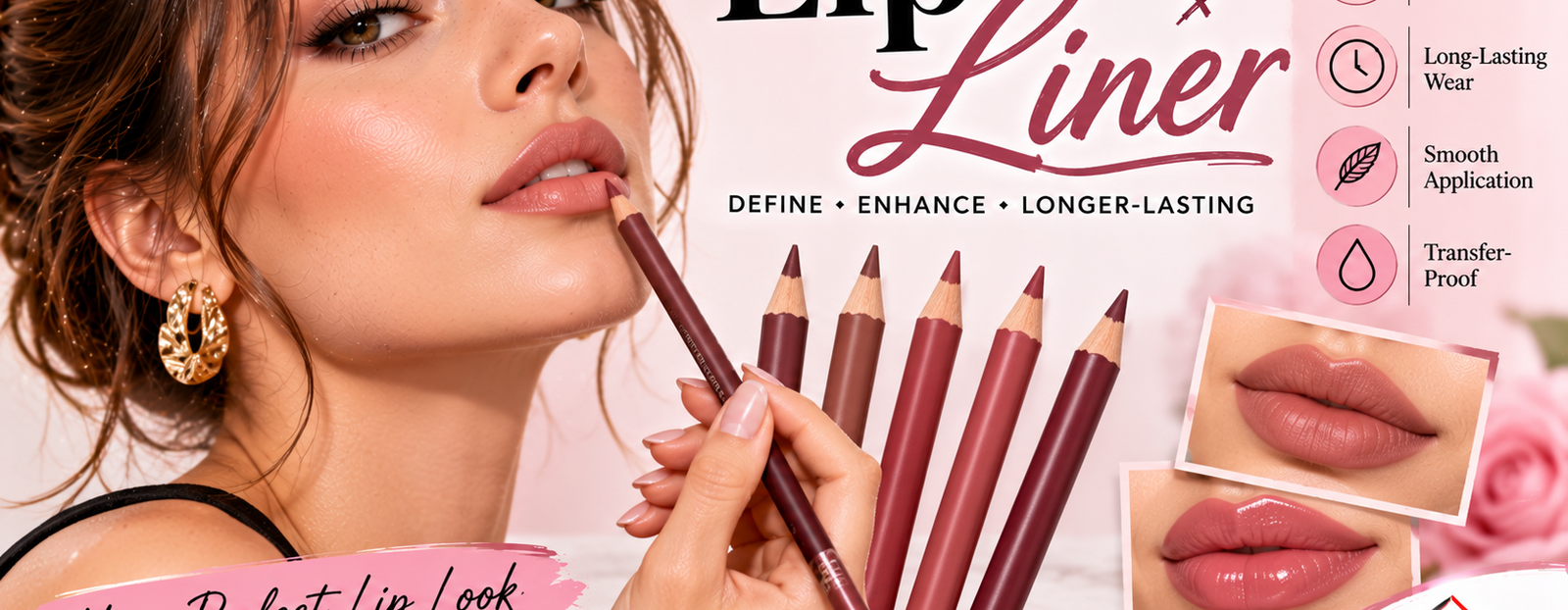
Lip liner advice is famously contradictory. One guide says always match the lipstick, another says go one shade darker, a third says a nude liner works with everything. They’re all partly right, because the correct choice depends on what you want the liner to do. This guide gives you a single system choose by undertone first, depth second, and goal third. You’ll learn how to pair liner with red, pink, nude, coral, berry, and brown lipsticks, how to handle glosses and liquid lipsticks, how to apply liner so it doesn’t leave a ring, and how to build a small liner collection that covers most of your makeup bag.
The Three Rules
- Undertone first. Most liner mistakes are undertone mistakes. Keep the liner in the same warm, cool, or neutral family as your lipstick.
- Depth second. Choose the same depth as the lipstick for a seamless look, or about one shade deeper than your natural lip color for subtle definition.
- Goal third. Decide whether you want invisible, defined, or deliberately contrasting, since that changes the rule.
Step One: Find Your Lip Undertone
Choose by the color of your lips liner and the lipstick you’re wearing, not just your skin. Lips liner with a peachy or brownish cast tend to be warm, while lips liner with a blue-pink or berry cast tend to be cool. A simple check from one shade guide: hold a true red object and a brick-red object near your mouth. Whichever makes your lips liner look healthier points to your undertone. If you’re also learning your undertone for other makeup, our guide to the best eyeshadow colors for every skin tone explains warm, cool, and neutral in more detail.
| Undertone | Looks Like | Liner Families |
|---|---|---|
| Warm | Peachy, golden, or brownish lips | Caramel, peach, coral, terracotta, brick, warm brown |
| Cool | Blue-pink or berry lips | Rose, mauve, berry, plum, blue-red |
| Neutral | Balanced, muted | Dusty pink, rosy brown, mauve-nude |
Step Two: Choose Your Goal
| Goal | The Rule | Result |
|---|---|---|
| Seamless | Match the liner to the lipstick | A crisp, even color with no visible outline |
| Natural definition | Choose a liner close to your natural lip color, or one shade deeper | Soft shaping that disappears into the lipstick |
| Intentional contrast | Use a liner noticeably different from the lipstick | A deliberate, stylized lip |
One conflict worth knowing: some guides say never wear a liner noticeably darker than your lipstick, while others recommend contrast combinations such as a red liner with soft pink lipstick or deep plum with nude for a statement look. Both are valid, but contrast is a style choice, and it works best when the undertones still agree.
Lip Liner for Each Lipstick Color
| Lipstick | Liner That Works | Why |
|---|---|---|
| Red | A matching true red, or one shade deeper | Prevents bleeding and keeps edges crisp. A nude liner is a softer fallback |
| Pink | A liner in the same undertone, whether cool rose, warm peachy pink, or dusty pink | Keeps the pink looking intentional |
| Nude or beige | A liner slightly deeper than the lipstick in the same undertone | Gives structure to nudes that can wash you out |
| Coral or peach | A warm terracotta, caramel, or coral liner | Reinforces warmth |
| Berry, plum, or wine | A matching berry or plum, or a deeper shade | Prevents fuzzy edges on dark colors |
| Brown | A rich brown in the same undertone | Keeps a brown lip warm instead of muddy |
| Bright or fashion shades (fuchsia, orange, purple) | A matching liner, or a clear or nude liner | Brights bleed easily, so structure helps |
| Lip gloss or tint | A natural shade close to your lip, or one shade deeper | Defines the edge without a heavy outline |
For red lipsticks specifically, one guide suggests three liners cover nearly every red: a true red, a warm nude, and a deep berry. When a nude lipstick tends to wash you out, one beauty guide suggests changing the liner before changing the lipstick.
How Skin Tone Affects Your Choice
Skin tone matters mostly through how your natural lip color sits against it. These pairings from a shade guide are a useful starting point:
| Skin Tone | Everyday Liner | Bolder Option |
|---|---|---|
| Fair, cool | Soft rose | Cool berry |
| Fair, warm | Peachy nude | Warm coral |
| Medium, neutral | Rosy brown | True red-pink |
| Medium, warm | Terracotta nude | Brick |
| Deep, cool | Plum-brown | Deep berry |
| Deep, warm | Cocoa-nude | Rich brick-red |
A note on nudes. Nude doesn’t mean beige for everyone. A true nude liner should echo the color of your own lips liner, so deeper skin tones usually suit richer, browner nudes, and anything too pale or pink-based tends to look chalky. A simple test for a nude liner: if the color nearly disappears into your skin along the jawline, it’s a good natural match.
Pairing Liner With Gloss
A liner and gloss combination is often easier than lipstick. For a soft look, choose a liner close to your natural lip color or one shade deeper, then layer clear or sheer gloss over it. Warm undertones suit caramel, peach, and coral combinations, while cool undertones suit blue-toned pinks, mauves, and plum. For a nude glow, a nude liner with a nude gloss works well. If you want to see how a popular gloss finish looks over liner, our guide to Fenty Beauty lip glosses covers the range.
Matching Liner to Lipstick Formula
- Matte: Matching the liner closely helps avoid a visible line as matte formulas wear.
- Cream or satin: Forgiving, so a slightly deeper liner works well.
- Liquid lipstick: Match the undertone exactly or use a nude liner, since liquid formulas show mismatches.
- Sheer tints and balms: A subtle liner or none at all.
- Long-wear formulas: Filling the whole lip with liner extends wear; see our guide to long-lasting lipstick for formulas that hold up.
How to Apply Lip Liner and Lipstick
- Prep your lips. Exfoliate gently and apply a thin layer of balm, then blot.
- Outline your natural lip line. Start at the cupid’s bow and work outward, using short strokes.
- Overline carefully, if at all. A tiny amount outside your natural line adds fullness, but too much looks obvious.
- Fill in the lips with liner, at least the outer half. Filling the entire lip prevents a visible ring as your lipstick wears off.
- Apply lipstick over the liner, pressing it into the edges.
- Blend the edge with a clean brush or your fingertip so there’s no hard line.
- Blot and reapply if you want extra staying power.
Our review of Dior lipsticks shows how a creamier luxury formula pairs with liner for a polished finish.
Build a Three-Liner Wardrobe
You don’t need a drawer of pencils. A simple set from one beauty guide:
- A your-lips-but-better shade that matches your natural lip color.
- A neutral nude slightly deeper than your natural lip tone, in your undertone.
- A liner that matches your favorite bold lipstick family, whether that’s red, berry, or rose.
If you only buy one, choose the neutral that disappears on your lips after blending, which works with bare lips and balm, nude lipsticks, and clear gloss.
Troubleshooting
| Problem | Likely Cause | Fix |
|---|---|---|
| Lipstick feathers or bleeds | No barrier at the lip line | Use a matching liner and fill the edges |
| A visible ring after lipstick wears off | Only outlined, not filled | Fill the whole lip with liner |
| Obvious outline | Liner too dark or wrong undertone | Choose a closer shade, and blend |
| Lipstick looks washed out | Pale nude with no structure | Switch to a slightly deeper liner |
| Liner drags or skips | Dry lips or a hard pencil | Hydrate, warm the tip slightly, or use a creamier formula |
| Looks clashing | Undertone mismatch | Match warm to warm and cool to cool |
Balance the Rest of Your Face
Bold liner and lipstick combinations look best with balanced cheeks and eyes. Our guide to the best blush formulas explains how to choose a color that sits well with warm or cool lips.
Common Mistakes
- Matching skin tone instead of lips.
- Ignoring undertone and focusing only on depth.
- Using a liner much darker than the lipstick by accident instead of as a deliberate contrast.
- Only outlining, which leaves a ring.
- Overlining too much.
- Skipping the blend.
Final Thoughts
Lip liner gets easier once you stop looking for a single correct rule. Match undertone first, choose your depth based on whether you want seamless or subtle, and decide whether you want the liner to disappear or stand out. Start with three liners, fill the lip liner, and blend, and your lipsticks will look more polished and last longer.
FAQ
Should lip liner match lipstick exactly?
Not always. For bold shades like red or plum, matching helps prevent bleeding, while for everyday wear a liner close to your natural lip tone or one shade deeper usually looks more natural, as long as the undertones match.
What lip liner color goes with every lipstick?
A neutral nude in your undertone, slightly deeper than your natural lip color, is the most versatile. It works with bare lips, nude lipsticks, and clear gloss.
What lip liner should I use with red lipstick?
A true red liner that matches your lipstick’s undertone is the safest choice, and a warm nude or a deep berry liner can work as alternatives.
How do I stop lipstick from bleeding?
Use a liner that matches your lipstick, apply it around the lip line, and fill in the lips before applying lipstick over it.

1 Comment
[…] you’re looking at liner specifically, our guide to choosing lip liner colors for different lipsticks explains undertone and depth matching, which applies directly to […]