
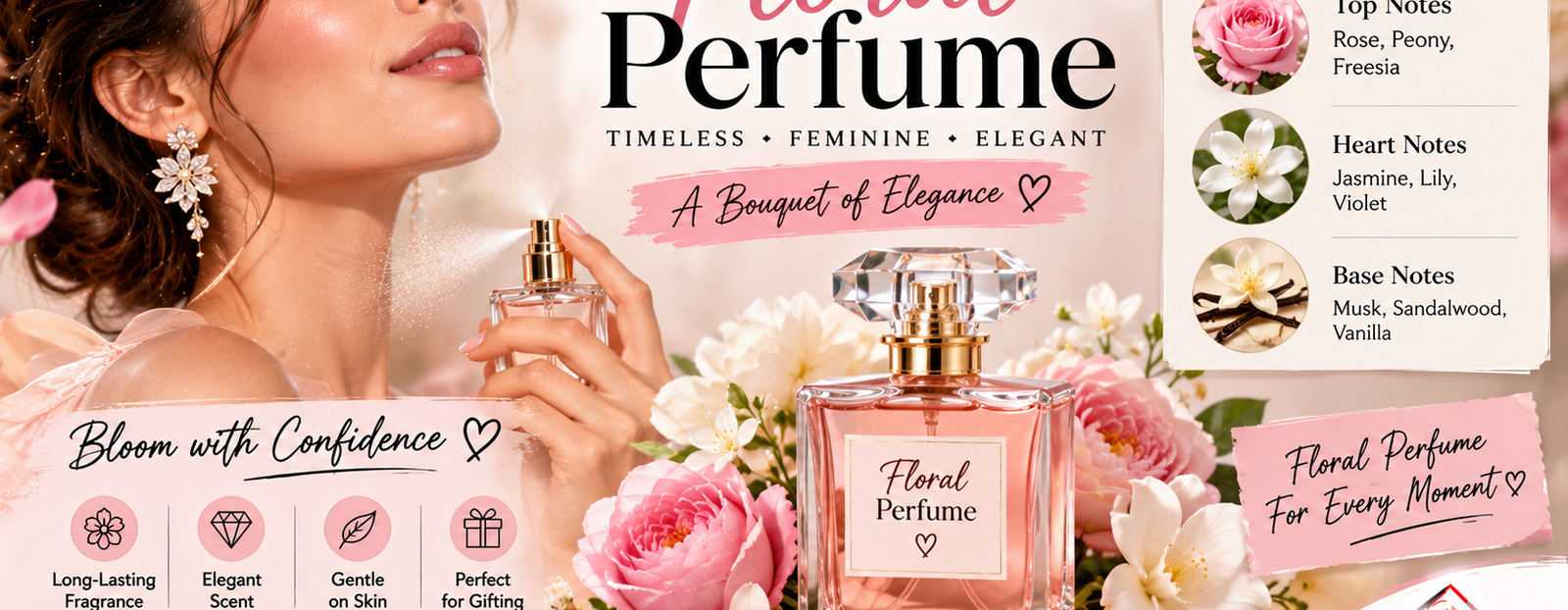
“Floral” is the most common description in perfume and one of the least useful. A soft peony that disappears by lunch and a buttery tuberose that fills a room are both called floral, which is why so many people buy a floral perfume they end up disliking. This guide breaks the category into what you’ll actually smell, explains why some florals fade fast while others project strongly, and gives you a simple way to choose and test one that suits your taste, your skin, and where you’ll wear it.
The Short Version
- Floral isn’t one smell. Rose, jasmine, tuberose, peony, and orange blossom smell very different.
- Soft versus bold is the first choice. Peony and lily of the valley read quiet, while tuberose, gardenia, and jasmine project more.
- Test on skin and wait. The dry-down tells you what you’ll actually be wearing.
- Start small. Sample or buy a small size before committing to a full bottle of a strong white floral.
Floral Notes Decoded
Perfume writers describe each flower as having a range, not a single character:
| Note | What It Can Smell Like | Typical Mood |
|---|---|---|
| Rose | Peppery, powdery, fresh, or jammy, depending on the formula | Romantic and classic |
| Jasmine | Sweet, green, musky, rich, or even a little animalic | Elegant and sensual |
| Tuberose | Creamy and buttery, sometimes green, occasionally with a cool, camphor-like edge | Rich and dramatic |
| Gardenia | Creamy and slightly vintage | Lush and nostalgic |
| Orange blossom | Fresh, bright, and sweet | Clean and sunny |
| Peony | Soft, airy, and fresh | Gentle and daytime |
| Lily of the valley | Light and clean | Quiet and fresh |
| Iris (orris) | Powdery and smooth | Refined and soft |
The takeaway: don’t shop by flower name alone. As one fragrance retailer points out, “white floral” is a style description, not a strength category, so it doesn’t mean faint or sugary.
Six Floral Perfume Families
| Family | What It’s Like | Examples Mentioned in 2026 Coverage |
|---|---|---|
| Soft or fresh floral | Peony and lily of the valley, airy and light | Good for offices and daytime |
| Fruity floral | Florals with berries, citrus, or pear for a sparkly feel | Kate Spade Pop, described as a mood-booster that won’t overwhelm close quarters |
| White floral bouquet | Jasmine, tuberose, and orange blossom, clean and elegant | Chanel Gabrielle, Gucci Bloom |
| Spicy white floral | White florals with pepper, saffron, or leather | Tom Ford Jasmin Rouge |
| Floral gourmand or amber floral | Florals blended with vanilla, amber, or musk | Estée Lauder Glimmer, launched in August 2026 as an amber floral gourmand |
| Jasmine-forward | Jasmine in the lead role | Dior J’adore, Gucci Flora Gorgeous Jasmine, Chanel Chance Eau Vive |
What’s Changing in Florals This Year
Bustle’s 2026 roundup describes the category as feeling new again, with a shift toward gourmand florals, where flowers meet vanilla, amber, or musk, and fresh-green florals. That means you no longer have to choose between “powdery grandmother” and “heavy tuberose”: there are airy green florals for daytime and warm, edible florals for evening.
How to Choose in Three Questions
1. Quiet or loud?
Soft florals such as peony and lily of the valley sit close to the skin and are polite in shared spaces. Bold white florals, such as tuberose, gardenia, and jasmine, project more and last longer, and coworkers will likely notice.
2. Where and when will you wear it?
- Office or daytime: Fresh, fruity, or soft florals.
- Evenings and dates: Deeper florals with vanilla, amber, or musk, or rose and jasmine with warm bases.
- Warm weather: Light orange blossom, peony, or green florals. If you wear a strong white floral in summer, use one or two sprays.
- Fall and winter: Richer, spicier, and gourmand-leaning florals.
3. What’s your skin like?
White florals respond well to warm skin, according to fragrance retailers. For dry skin, one perfumer’s tip is to look for floral orientals or fragrances with a strong base, since dry skin tends to hold fragrance less well and a sturdy base helps.
Why Some Florals Fade (and How to Avoid That)
The delicate middle notes that define a floral, such as the jasmine heart, soft peony, and creamy tuberose, are the first to fade at lower concentrations, according to one fragrance brand. A few practical consequences:
- Concentration matters. Eau de parfum typically lasts longer than eau de toilette, and extrait or parfum lasts longer still.
- Base notes extend the life. Florals with sandalwood, musk, amber, or vanilla underneath last longer than a bouquet with nothing to hold it.
- Fresh florals fade faster by design. Plan on reapplying.
- A single flower is more fleeting than a blended bouquet.
How to Test a Floral Perfume
- Test on skin, not paper. Paper strips capture the opening notes, but the dry-down only appears when the fragrance meets your skin chemistry.
- Try one at a time, and wait at least 30 minutes before judging, since the middle and base take time to show up.
- Start with one or two sprays for strong white florals like tuberose and gardenia, especially in warm weather or small spaces.
- Check at the end of the day, when the base should be all that remains.
- Buy a small size or decant first if you’re new to a note. If you’re considering a discount decant retailer, our review of Fragrance Nevaeh explains what to check before ordering.
- Don’t judge by the name. A flower in the title doesn’t tell you whether the scent is sweet, green, or creamy.
Floral Perfume Picks by Situation
These examples come from 2026 roundups and are starting points, not rankings of quality:
| Situation | Direction | Example |
|---|---|---|
| Office | Fresh, fruity floral | Kate Spade Pop |
| Everyday white floral | Clean bouquet | Chanel Gabrielle, Gucci Bloom |
| Signature or special occasion | Rich jasmine | Dior J’adore, Tom Ford Jasmin Rouge |
| Warm and gourmand | Floral with amber or vanilla | Estée Lauder Glimmer |
| Accessible gourmand-adjacent florals | Jasmine, orange blossom, vanilla | See our guide to Sabrina Carpenter’s Lemon Pie and other scents |
What Floral Perfume Costs
Recent roundups put mainstream designer florals at roughly $75 to $120, and niche or luxury bottles above $200, with one guide listing Tom Ford Jasmin Rouge at about $237. Prices vary by size and retailer, and gift sets can offer better value; see our guide to Ariana Grande perfume sets for how sets compare with full bottles.
Are Floral Perfumes Only for Women?
No. As one perfumer puts it, they’re just notes, and jasmine and tuberose are worn by men as well. If you prefer a less sweet, more green or woody direction, look for florals with cedarwood, vetiver, or leather in the base.
How to Wear It
- Apply to pulse points such as the wrists, neck, and behind the ears, where warmth helps the scent bloom.
- Moisturize first, since fragrance lasts longer on hydrated skin.
- Layer lightly with a matching body mist for more staying power. Our review of the EOS body mists shows how layering a mist and lotion in the same scent works.
- Reapply sparingly rather than overspraying.
Common Mistakes
- Buying from the opening notes without waiting for the dry-down.
- Overspraying a strong white floral, which can feel overwhelming.
- Assuming “floral” means soft or sweet.
- Wearing a heavy floral in a hot, close space.
- Skipping a sample and ending up with a full bottle you don’t wear.
Final Thoughts
Choosing a floral perfume gets easier once you stop treating “floral” as one scent. Decide whether you want quiet or bold, pick the flower or family that matches your taste, test on your skin and wait for the dry-down, and start with a small size. With a good match, a floral can be a quiet everyday signature or a dramatic evening scent, depending on how you wear it.
FAQ
What are the main types of floral perfume?
Common types include soft and fresh florals, fruity florals, white floral bouquets, spicy white florals, floral gourmands with vanilla or amber, and jasmine-forward fragrances.
Which floral perfume lasts the longest?
Bold white florals like tuberose, gardenia, and jasmine, and florals with strong bases of musk, amber, sandalwood, or vanilla, usually last longer than light peony or lily of the valley scents.
What’s the difference between jasmine and tuberose?
Jasmine can smell sweet, green, musky, or rich, while tuberose is often creamier and fuller and can have a cool, camphor-like edge.
How should I test a floral perfume before buying?
Spray it on skin, wait at least 30 minutes for the dry-down, and check again at the end of the day. For strong white florals, start with one or two sprays and consider a small size first.

1 Comment
[…] skin perfume gives a soft, consistent aura. If you’re choosing a scent family, our guide to floral perfumes explains how to match notes and test them. If you like sweeter, gourmand scents, our look at […]