Picking the right hair wax stick isn’t just about grabbing whatever’s on the shelf at the drugstore the formula that works beautifully for fine, straight hair can be completely wrong for thick, coarse, or curly hair, and vice versa. This guide walks through exactly how hair wax sticks work, what they’re best used for, and the specific application tips that make the biggest difference depending on your hair type.
What Makes a Hair Wax Stick Different
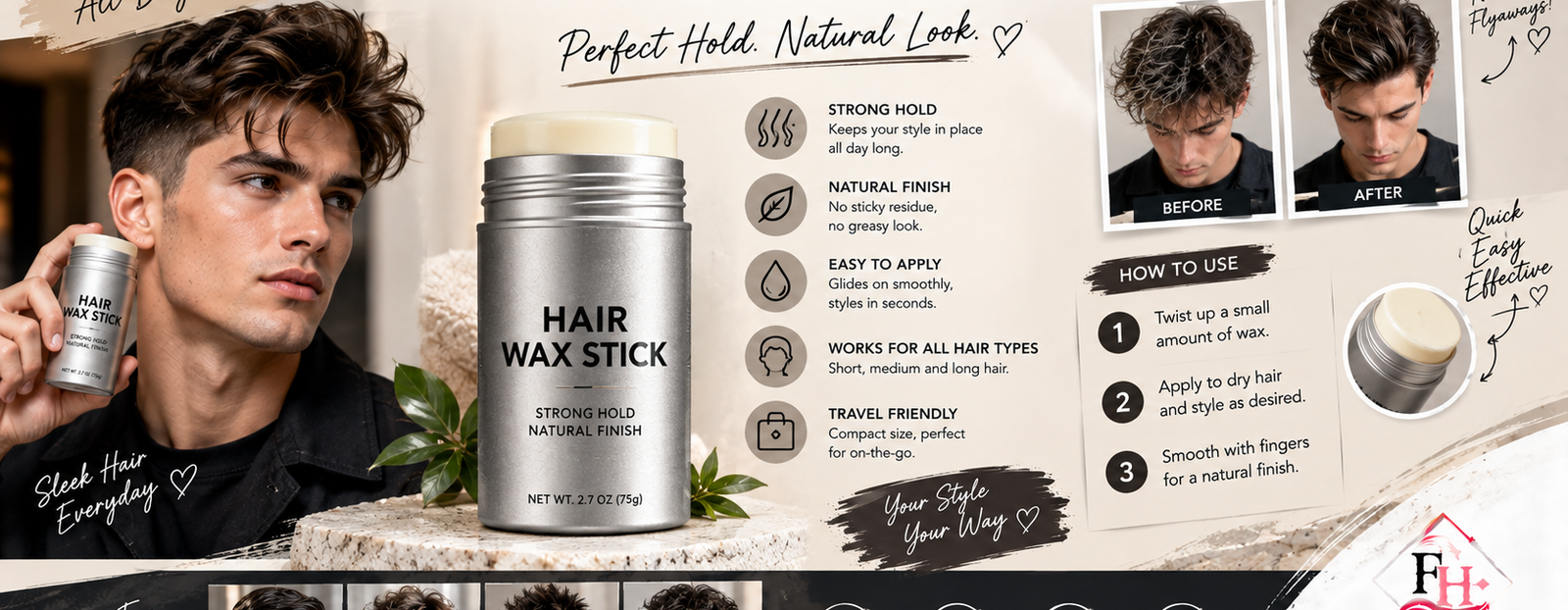
Hair wax sticks are solid wax formulas, typically built from ingredients like beeswax, lanolin, or other waxes combined with oils and resins, designed to be applied directly to the hair. That solid format is the key differentiator from a liquid pomade or spray wax it gives you significantly more control over precisely where the product ends up, which matters a lot when you’re trying to smooth one stubborn section of flyaways rather than restyling your entire head.
They’re particularly favored because they offer more control compared to liquid or spray waxes, and they work well across a genuinely wide range of hair types, whether you have fine, medium, or coarse hair. The same base product category can add texture to fine hair, control volume in thick hair, and define curls in wavy or curly hair, which is exactly why understanding your own hair type matters more than the specific brand you choose.
Core Benefits by Use Case
Taming Flyaways and Baby Hairs
This remains the single most common reason people reach for a wax stick. The targeted, precise application is ideal for smoothing down stray strands around the hairline or crown without disturbing the rest of your style.
Defining Sleek Styles and Edges
For polished looks like slicked-back styles, updos, or clean buns, a firmer-hold wax stick delivers the control and glossy finish needed to keep every strand in place throughout the day.
Adding Texture to Flat or Fine Hair
A lighter-hold formula can separate strands and build visible texture and dimension, which is especially useful for hair that otherwise falls flat or lacks natural body.
Controlling Frizz and Humidity
Many current formulas are built specifically to resist humidity and frizz over extended periods, with some products marketed around multi-day humidity shields and frizz control, making them a genuinely practical option for humid climates or long workdays.
Choosing the Right Formula Hair Type by Hair Type
Fine or Thin Hair
Fine hair should stick with lightweight formulas that won’t weigh strands down or leave them looking greasy. Use small amounts for a natural look, since it’s always easier to build up product than to remove excess once it’s been worked through.
Curly or Textured Hair
Curly and textured hair generally benefits from a stronger-hold wax, which helps control frizz and keeps curls looking neat and well-defined throughout the day, rather than losing shape as hours pass.
Straight Hair
Straight hair usually only needs a small amount of wax to smooth down flyaways without adding unnecessary bulk, since straight strands don’t require the same volume-building or curl-defining support other textures need.
Thick or Coarse Hair
Thick or coarse hair needs a richer wax with higher viscosity, giving strands the extra moisture and hold required to manage denser, more resistant hair that lighter formulas simply can’t control.
Sensitive Scalp
If you have a sensitive scalp, choosing a wax made with gentle, natural ingredients helps protect your scalp while still keeping your chosen style in place throughout the day.
Step-by-Step Application Tips
Getting the technique right matters just as much as picking the correct formula. A few consistent tips make a real difference:
- Don’t apply directly from the stick to your hair. Rub the product between your hands first to warm and soften it, then work it through your hair with your fingers. Applying straight from the stick tends to create uneven, overly concentrated patches rather than smooth, even coverage.
- Use a little at a time. A little goes a long way with most wax formulas, and starting conservative means you can always add more without risking a heavy, greasy finish.
- Start at the roots for volume, or the mid-lengths for smoothing. Where you begin application changes the overall effect starting near the roots builds more lift and texture, while beginning at mid-lengths is better suited for smoothing flyaways without adding volume you don’t want.
- Save a small amount on your fingertips for detail work. After your base application, use whatever’s left on your hands to target specific flyaways, define your part, or smooth edges precisely.
- Style while the product is still workable. Wax sticks generally offer a flexible, restylable hold rather than an instantly set one, so shaping your style as you go tends to produce better results than applying the product and adjusting afterward.
Common Mistakes to Avoid
- Using too much product at once. This is consistently the most common misstep, leading to a heavy, greasy, or waxy-looking finish rather than the smooth, natural result most people want.
- Choosing the wrong hold strength for your hair type. A lightweight formula won’t hold up on thick, coarse hair, while a heavy, high-hold wax will weigh down fine hair almost immediately.
- Skipping regular washing. Hair wax is unlikely to cause damage when used correctly and washed out regularly, but failing to wash it out consistently can lead to buildup that eventually dries out the hair.
- Applying to completely dry, unprepped hair for sleek styles. For polished, controlled looks specifically, working the wax through slightly damp or freshly styled hair tends to give a smoother, more professional-looking finish than applying to fully dry strands.
How Wax Sticks Compare to Other Styling Products
If you’re deciding whether a wax stick is even the right product for your needs, it helps to understand the broader styling category. Hair gel delivers strong hold and a wet, shiny finish, but can leave hair feeling stiff and crunchy, while pomade offers a similarly slick finish that can sometimes feel heavier depending on the specific formula. Wax sticks sit in a genuine middle ground: flexible enough for restyling throughout the day, but with more targeted, controlled application than either liquid alternative.
How Often to Use a Hair Wax Stick
You can use hair wax as often as your styling needs require, since there’s no strict limit on frequency. The real consideration is pairing regular use with a proper washing routine using too much wax or failing to wash it out regularly is what leads to buildup and potential dryness over time, not the frequency of application itself.
Building a Complete Hair Care Routine Around Your Styling Product
A hair wax stick works best when paired with a hair care routine built to handle the product buildup that comes with regular styling. On wash days, a gentle, transparent formula like the one covered in our Native Shampoo review helps fully clear wax residue without over-stripping your hair. If you’re using wax frequently, our batana hair oil guide covers a nourishing treatment that can help restore moisture and shine between styling sessions.
For anyone combining multiple styling products for different effects, our guide to sea salt spray for hair is a useful companion piece layering a texturizing spray with a wax stick for targeted hold is a common technique for building more dimensional, lived-in styles. And on days when a full wash isn’t in the cards, our Batiste dry shampoo guide rounds out a complete, low-effort styling and hair care rotation.
Final Thoughts
Getting the most out of a hair wax stick comes down to two things: matching the formula’s hold strength to your specific hair type, and applying it correctly warmed between your hands, in small amounts, targeted to exactly where you need it. Whether you’re managing fine, thin hair that needs a light touch or thick, coarse hair that needs real grip and moisture, understanding these fundamentals will get you a far more polished, natural-looking result than simply grabbing the first wax stick you find.
FAQ
How much hair wax should I use?
Start with a small amount, since a little goes a long way with most formulas. It’s always easier to add more product than to remove excess once it’s been applied.
Should I apply hair wax directly from the stick?
No rubbing the product between your hands first to warm and soften it, then working it through your hair with your fingers, gives much more even, controlled coverage than applying straight from the stick.
What hair wax stick is best for curly hair?
Curly and textured hair generally does best with a stronger-hold formula, which helps control frizz and keep curls defined throughout the day.
Can I use hair wax every day?
Yes there’s no strict limit on how often you can use hair wax, as long as you maintain a proper washing routine to prevent buildup and potential dryness over time.