
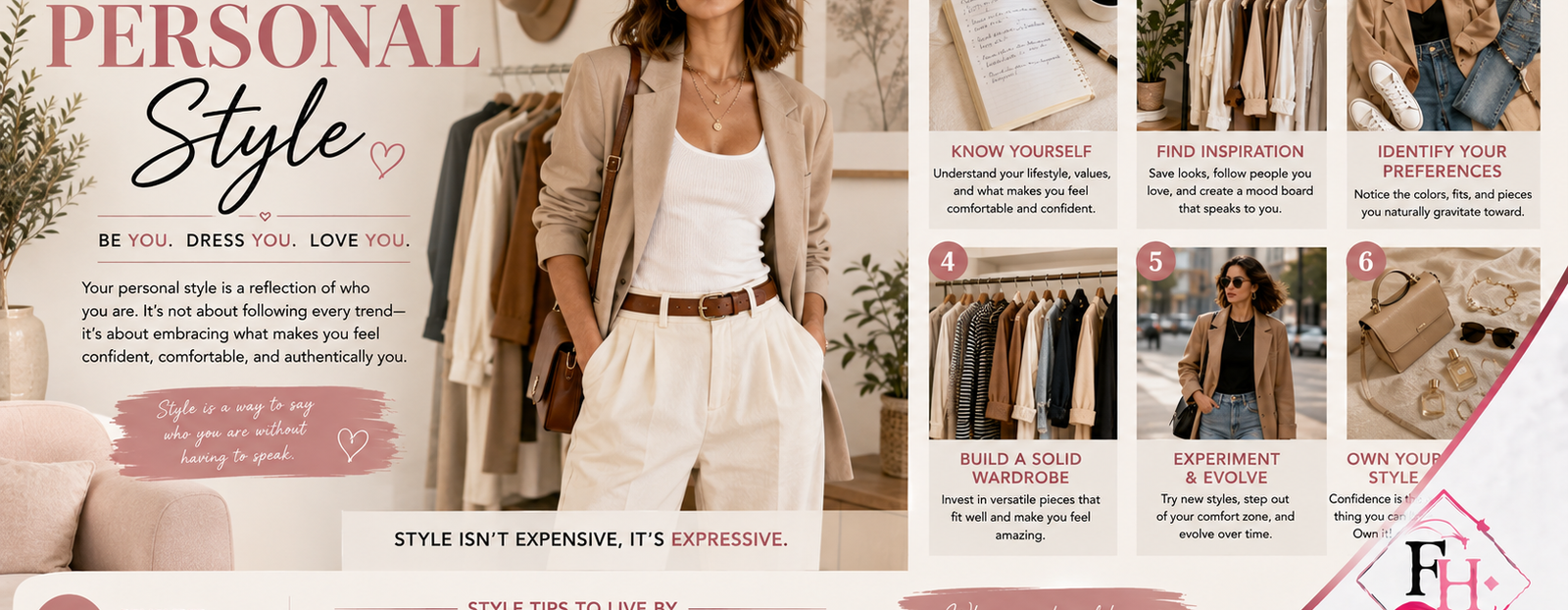
If you’ve ever stood in front of a full closet feeling like you have “nothing to wear,” you’re not alone. Millions of Americans search for how to find their personal style every year, and 2026 is proving to be a turning point for the way people approach fashion. Instead of chasing every microtrend that cycles through social media, more people are shifting toward intentional, personality-driven dressing that feels authentically theirs. Here’s a complete, step-by-step guide to discovering your personal style this year no stylist required.
Why “Personal Style” Is Trending Differently in 2026
For years, fashion moved through a dizzying rotation of aesthetics one month it was cottagecore, the next it was dark academia, then the “mob wife” look took over. In 2026, that constant churn is giving way to something more sustainable: a genuine search for personal style rather than another trend to copy. This shift matters because personal style isn’t about acquiring more clothes it’s about shopping more confidently, buying less, and building a wardrobe that actually reflects who you are rather than what an algorithm is pushing this week.
Step 1: Audit Your Closet Before You Buy Anything New
The fastest way to understand your personal style is to look at what you already own and love. Pull out the pieces that consistently make you feel confident, comfortable, and like yourself then look for patterns. Are they mostly neutral colors? Structured silhouettes? Soft, flowy fabrics? This exercise reveals more about your natural taste than any style quiz ever could, and it costs nothing.
Just as importantly, notice the pieces you never reach for. Clothes that sit untouched in your closet often reveal just as much as your favorites they show you what doesn’t feel like “you,” even if you liked them enough to buy them at the time.
Step 2: Build a Visual Style Library
Once you’ve reviewed your closet, start collecting outside inspiration. Create a Pinterest board, an Instagram saves folder, or even an old-school magazine clippings collection, and save any outfit that gives you an instant “yes” reaction. Don’t overthink this step the goal is to gather freely first and analyze later.
After a few weeks of saving, go back through your collection and look for recurring elements: colors that show up again and again, a particular silhouette you keep gravitating toward, or a consistent mood (polished, relaxed, edgy, romantic). This becomes your personal style library, and it’s one of the most reliable ways to identify patterns you might not consciously notice day to day.
Step 3: Define Your Style in Three Words
Once patterns start to emerge from your mood board and closet audit, try summarizing your style in three descriptive words for example, “feminine, minimal, elevated” or “relaxed, tailored, warm.” This simple exercise gives you a filter to run future purchases through: if a piece doesn’t match at least one of your three words, it’s probably not a true reflection of your personal style, even if it’s trending.
Step 4: Dress for Your Lifestyle, Not Just Your Aesthetic
Personal style only works if it’s practical for your actual daily life. A polished, structured wardrobe looks great on a mood board, but if your days are spent chasing kids, commuting, or working on your feet, comfort and function need to be part of the equation too. Ask yourself what your typical week actually looks like, and build your style choices around that reality rather than an idealized version of your life.
Step 5: Choose Silhouettes That Work With Your Body, Not Against It
Personal style isn’t about changing your body to fit clothes it’s about choosing shapes that support the body you already have. Pay attention to which silhouettes make you feel most confident and balanced, whether that’s a structured blazer that adds definition or a soft, draped fabric that feels easy and fluid. When a shape works with your natural proportions, you’ll find yourself reaching for it again and again, which is often the clearest sign it belongs in your personal style.
Step 6: Notice What Makes You Feel Confident, Not Just What Looks Good
There’s a difference between clothes that photograph well and clothes that genuinely make you feel like yourself. Start paying attention to the outfits that shift your mood or posture maybe a fitted blazer makes you stand taller, or a soft knit sweater helps you relax. Keep a running note on your phone (or a small style journal) any time you notice that shift. Over time, this becomes one of the most personal and accurate maps of your actual style, far more useful than any generic style quiz.
Step 7: Let Your Style Evolve With Your Life
Personal style isn’t static, and it shouldn’t be. The trouser cut that feels perfect for your current job or season of life may feel completely different a few years from now after a move, a new role, or simply personal growth. Rather than trying to lock in one permanent identity, treat your personal style as something that naturally evolves alongside you a reflection not just of who you are now, but of who you’re becoming.
Step 8: Look to Real Life, Not Just Curated Feeds
Social media is a great starting point for inspiration, but real-life browsing matters too. Spend time in stores physical or online even when you’re not shopping for anything specific. Try things on with no pressure to buy, purely to learn what fits and flatters you. This kind of low-stakes experimentation often teaches you more about your personal style than hours of scrolling ever will, and it helps you notice real gaps in your wardrobe, like realizing you own zero neutral basics to anchor your boldest pieces.
Common Mistakes to Avoid When Finding Your Style
- Copying an influencer completely instead of adapting elements that genuinely fit your life and body
- Buying trend pieces impulsively, then wondering why they never get worn
- Ignoring comfort in favor of a look that only works for photos
- Expecting instant results — personal style is built gradually through trial, error, and reflection, not overnight
- Overlooking the details — sometimes the biggest style shift comes from finishing an outfit properly rather than buying entirely new pieces
Finishing Your Personal Style With the Right Beauty Choices
Personal style extends beyond clothing your beauty routine plays a major role in how complete and “you” an outfit feels. A well-matched foundation creates the same effortless base that makes even simple outfits look intentional, while a flattering blush can echo the same color story running through your wardrobe. If your personal style leans toward bolder statement pieces, pairing them with the right eye makeup ties the whole look together this breakdown of the best eyeshadow colors for every skin tone is a useful reference for matching your makeup to your undertone the same way you’d match a silhouette to your body.
Getting Style Inspiration From Celebrities the Right Way
Celebrity style can be a great jumping-off point for building your personal style, as long as you adapt it rather than copy it outright. Icons like Gigi Hadid have built entire personal brands around consistent, repeatable style formulas rather than constant reinvention this look at Gigi Hadid’s fashion shows how sticking to a few signature pieces, like loafers and utility jackets, can define a recognizable personal style over time. Similarly, this year’s biggest fashion trends 2026 roundup can help you decide which current trends are actually worth incorporating into your personal style versus which ones are just noise.
Final Thoughts
Finding your personal style isn’t something that happens overnight, and it’s not meant to. It’s a gradual process of paying attention to what’s already in your closet, to what genuinely makes you feel confident, and to how your taste naturally shifts as your life changes. Rather than treating fashion as a race to keep up with the latest trend cycle, 2026’s biggest style lesson is refreshingly simple: the most stylish thing you can wear is something that actually feels like you.
Frequently Asked Questions
How long does it take to find your personal style?
There’s no fixed timeline for most people, it’s an ongoing process rather than a one-time discovery. Regularly auditing your closet, building a mood board, and paying attention to what makes you feel confident will naturally reveal patterns over a few weeks to a few months.
What’s the easiest first step to finding my personal style?
Start with your own closet. Pull out the pieces you already love and wear often, then look for common colors, fabrics, or silhouettes. This tells you more about your natural taste than shopping for something new.
Should I follow fashion trends or focus only on personal style?
You don’t have to choose one or the other. The healthiest approach is treating trends as optional inspiration and only incorporating the ones that genuinely align with the three words that describe your personal style.
How do I know if a clothing item fits my personal style?
Ask whether the piece matches at least one of the core words you use to describe your style, whether it works with your lifestyle, and whether it makes you feel confident rather than just “on trend.” If it checks those boxes, it’s a good fit.
Can my personal style change over time?
Yes, and it should. Personal style naturally evolves alongside changes in your life, like a new job, a move, or simply personal growth. What feels right today may look different in a few years, and that’s a normal part of the process.
Do I need a stylist to find my personal style?
No. While a stylist can speed up the process, most people can identify their personal style through simple self-guided steps like a closet audit, a style mood board, and paying attention to what genuinely makes them feel confident.


2 Comments
[…] through trial, reflection, and paying attention to what actually feels like you. This guide on how to find your personal style walks through practical steps for identifying your natural preferences, whether that leans toward […]
[…] building the rest of your outfit is where personal style really comes into play. This resource on how to find your personal style can help you decide whether bootcut jeans deserve a permanent spot in your wardrobe or a more […]