
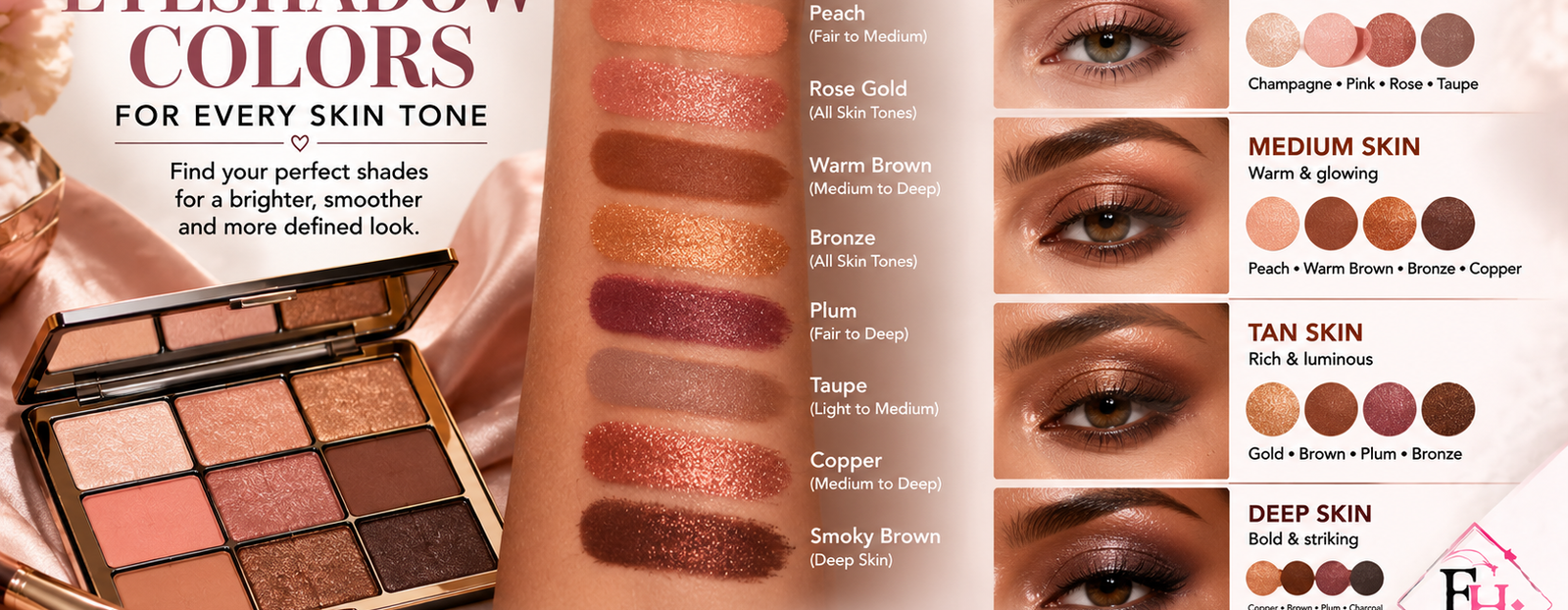
Finding the right eyeshadow shade can completely change how your eye makeup looks the same palette that makes one person’s eyes pop can wash out someone else. The secret isn’t a “universal” shade, it’s matching undertones, contrast, and finish to your unique skin tone. Below is a complete, up-to-date breakdown of the best eyeshadow colors for fair, light, medium, olive, tan, and deep skin tones, plus tips on undertones, finishes, and product pairing so you can build a look that actually flatters you.
Why Skin Tone and Undertone Matters for Eyeshadow
Before picking colors, it helps to know two things about your skin: your depth (how light or deep your skin is) and your undertone (warm, cool, or neutral).
- Warm undertones have golden, peachy, or yellow hues gold, copper, and warm browns tend to look natural.
- Cool undertones lean pink, red, or blue think mauves, plums, and icy silvers.
- Neutral undertones are a mix of both, which means you can wear almost any shade with ease.
A quick way to check: look at the veins on your wrist in natural light. Greenish veins usually mean warm undertones; bluish/purple veins usually mean cool undertones; if you can’t tell, you’re likely neutral.
Best Eyeshadow Colors for Fair Skin
Fair skin (often with pink or cool undertones) can be overwhelmed by shades that are too dark or too warm. The goal is contrast without harshness.
- Soft taupe and champagne — a natural everyday base
- Rose gold and dusty pink — adds warmth without looking orange
- Cool-toned lavender — brightens the eyes beautifully
- Charcoal grey — a softer alternative to jet black for definition
Avoid heavy orange-based bronzes, which can look muddy against very fair skin. If you love a dramatic finish, a shimmery champagne base paired with a matte crease shade from a refined palette like the one in this Dior eyeshadow roundup is a great starting point for building a soft, buildable look.
Best Eyeshadow Colors for Light-Medium Skin
Light-medium skin tones have more flexibility and can handle richer pigments without them looking too stark.
- Warm bronze and copper — instantly flattering, works for day or night
- Terracotta and burnt orange — adds a sun-kissed glow
- Soft plum — deepens the eye without being harsh
- Golden peach — perfect for a fresh, everyday look
This skin tone range also handles jewel tones exceptionally well, especially emerald green and sapphire blue used as an accent on the lid.
Best Eyeshadow Colors for Medium and Olive Skin
Olive and medium skin tones often have subtle green or yellow undertones, which makes warm and earthy shades especially harmonious.
- Deep bronze and amber — enhances natural warmth
- Moss green — complements olive undertones beautifully
- Warm terracotta — a go-to for a natural, sculpted eye
- Copper with gold shimmer — great for evening looks
Olive skin also pairs surprisingly well with muted mauve and berry tones for a modern, “your-eyes-but-better” effect. If you’re building a full glam look, coordinating your eyeshadow’s warmth with your cheek color like the tones covered in this guide to the best blush for various skin types helps everything blend cohesively.
Best Eyeshadow Colors for Tan and Deep Skin
Tan and deep skin tones can carry the most saturated, richly pigmented shadows without them looking dull this is where color really gets to shine.
- Deep burgundy and wine — rich and sophisticated
- Bright copper and burnt orange — glows beautifully on deeper skin
- Cobalt blue and emerald green — jewel tones look stunning with high melanin
- Golden bronze with high shimmer — a red-carpet-worthy finish
Matte black and deep espresso browns also read as especially crisp and defined on deep skin, making them ideal for a smoky eye that doesn’t disappear into the skin.
Universal Shades That Work on Every Skin Tone
If you only buy a few eyeshadows, these shades are close to foolproof across the board:
- Matte taupe brown — the perfect transition shade for any eye shape
- Warm champagne shimmer — an easy inner-corner highlight
- Soft matte black — for subtle definition along the lash line
- Rich chocolate brown — deepens the crease on every skin tone
These neutrals form the backbone of a versatile eyeshadow collection, and building around them means you can mix in bolder trend colors without redoing your whole kit each season.
Choosing the Right Finish: Matte, Shimmer, or Satin
Color isn’t the only variable finish changes how a shadow reads on your skin too.
- Matte shades are best for contouring the eye (crease, outer corner) and work on all skin tones.
- Shimmer and metallic finishes reflect light and look especially luminous on deeper skin tones, where they show up with more dimension.
- Satin finishes sit between the two a soft sheen that’s more forgiving than full shimmer, great for daytime looks.
For mature skin or fine lines around the eyes, leaning toward satin or soft-focus matte shades (rather than glittery shimmer) tends to look smoother.
How to Test Eyeshadow Shades Before Buying
Because lighting and packaging swatches can be misleading, always:
- Swatch on your actual eyelid, not just your hand the skin texture and undertone differ
- Check the shade in natural daylight, not just store lighting
- Consider your eye color too brown eyes are highly versatile, blue eyes pop with warm oranges and coppers, green eyes are enhanced by purples and plums
If you’re building a full “get ready” routine, pairing your eyeshadow choice with the right base makeup matters just as much as the shade itself starting with a good foundation that matches your undertone ensures your eye look doesn’t clash with the rest of your complexion.
Building a Complete Eye Look by Skin Tone
Once you’ve picked your shades, application order matters:
- Prime the lid to help pigment stay true to color all day
- Apply a transition shade in the crease slightly darker than your skin tone
- Pack on your main color with a flat brush for intensity
- Blend the edges with a clean fluffy brush so there are no harsh lines
- Add shimmer to the center of the lid or inner corner for dimension
A well-blended eyeshadow look also lasts longer when your base products are long-wearing if smudging is a concern, checking your eyeliner formula matters too, since a smudge-proof pick like those featured in this Maybelline eyeliner comparison can help your whole eye look stay crisp through the day.
Frequently Asked Questions
What eyeshadow color makes brown eyes pop the most?
Brown eyes are the most versatile and can wear almost any shade, but purples, plums, and cool blues create the strongest contrast and really make brown eyes stand out. Warm coppers and golds also enhance the natural richness of brown eyes.
What is the best eyeshadow color for beginners?
A matte taupe or soft brown is the easiest starting shade for anyone new to eyeshadow. It blends easily, works as a transition color, and flatters nearly every skin tone without looking too dramatic.
Do darker skin tones need different eyeshadow formulas, not just colors?
Not necessarily different formulas, but deeper skin tones often show more true-to-pan color with highly pigmented, richly saturated shadows, while shimmer and metallic finishes tend to show up with more visible dimension and glow.
How do I know if I have a warm or cool undertone for eyeshadow matching?
Check the veins on your inner wrist in natural light. Greenish veins usually indicate warm undertones (gold, copper, and earthy shades suit you best), while bluish or purple veins point to cool undertones (mauve, plum, and silver tend to look best).
Can I wear the same eyeshadow shades for day and night?
Yes the easiest way is to keep the same color family but change the finish and intensity. Use a soft matte or satin version of the shade for daytime, then layer on shimmer or deepen the crease for a nighttime look.
What eyeshadow colors should fair skin avoid?
Very fair skin tends to look best avoiding heavily orange-toned bronzes and shadows that are too dark or too warm, as these can overwhelm lighter complexions and look muddy instead of blended.
Final Thoughts
There’s no single “best” eyeshadow color the best shade is the one that works with your skin’s depth and undertone rather than against it. Fair skin shines with soft rosy and taupe tones, olive skin glows with warm earthy shades, and deep skin tones can carry the boldest jewel tones and shimmer with ease. Start with a versatile neutral palette, then build outward with the shades that flatter your undertone most, and don’t be afraid to experiment eyeshadow is one of the most forgiving, low-commitment ways to try a new color in your beauty routine.




6 Comments
[…] festival grounds. If you’re planning your own festival beauty routine, this breakdown of the best eyeshadow colors for every skin tone is a great place to start, since so many of this year’s celebrity looks paired bold clothing […]
[…] now, and choosing a shade that suits your undertone makes a big difference this breakdown of the best eyeshadow colors for every skin tone is a great reference before you buy your first […]
[…] with the year’s bolder color palette on top, don’t overlook your eyes this guide to the best eyeshadow colors for every skin tone breaks down how to match your makeup to both your complexion and the season’s boldest fashion […]
[…] it with a softer eye look keeps the overall makeup from feeling overdone this guide to the best eyeshadow colors for every skin tone can help you choose shades that complement a strong lip rather than clash with it. On days when […]
[…] carpet moments, pairing a statement outfit with the right eye makeup matters too this guide to the best eyeshadow colors for every skin tone can help you build a complementary look for your own […]
[…] jewel-toned or richly saturated dresses, coordinating your eye makeup matters too this guide to the best eyeshadow colors for every skin tone can help you choose a complementary shade rather than one that competes with your outfit. For a lip […]