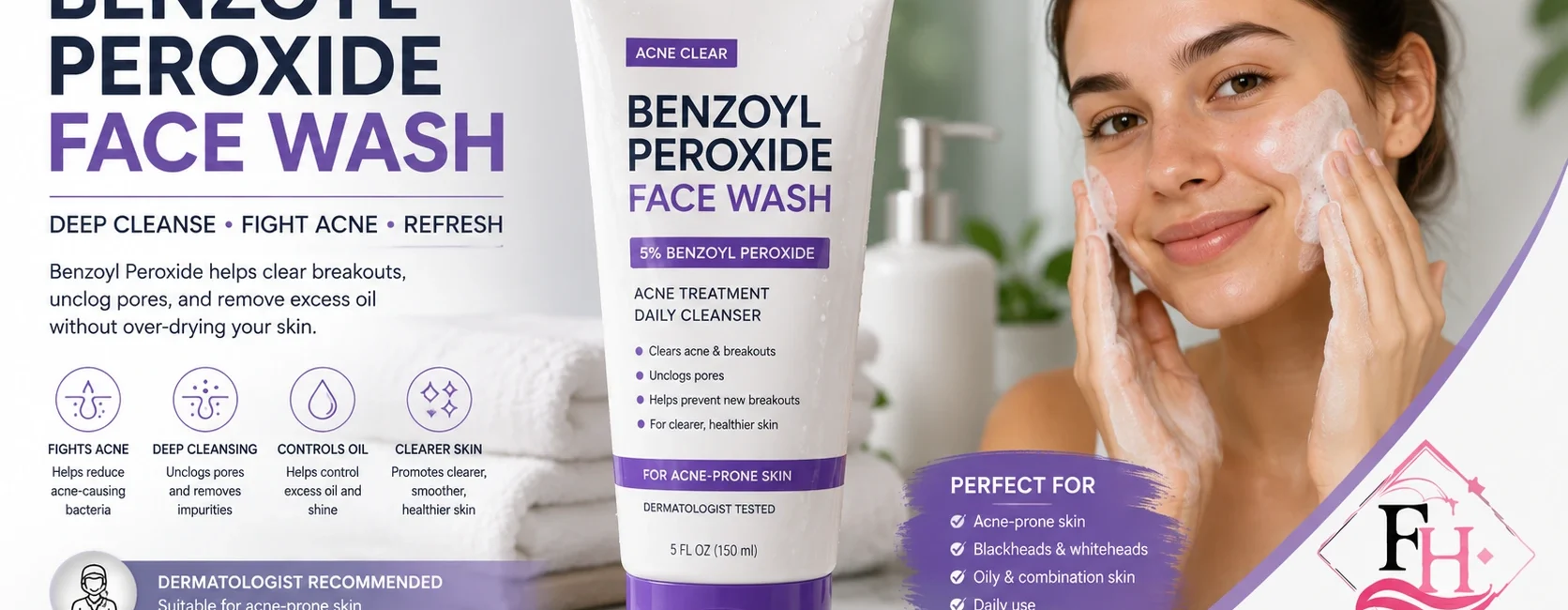
Benzoyl peroxide remains one of the most trusted, dermatologist-recommended ingredients for treating acne, and a face wash is often the gentlest way to add it to your routine. If you’re trying to figure out how benzoyl peroxide actually works, which strength and product is right for your skin, and how to use it without over-drying your face, this guide breaks down everything worth knowing in 2026.
How Benzoyl Peroxide Actually Works
Benzoyl peroxide targets acne at its source by working against the bacteria that drive breakouts in the first place. The acne-causing bacteria, Cutibacterium acnes, is anaerobic, meaning it thrives in the oxygen-starved environment of a clogged pore. When benzoyl peroxide touches the skin, it breaks down and releases oxygen directly into the pore, effectively making that environment unlivable for the bacteria causing the inflammation.
That mechanism is exactly why benzoyl peroxide tends to work best on red, inflamed pimples specifically, since those breakouts are caused by bacteria thriving in oily blockages. If your main concern is non-inflamed clogged pores or blackheads rather than active, inflamed acne, a salicylic acid cleanser is generally considered a better-suited option, since it works through a different exfoliating mechanism.
Why a Face Wash Is Often the Better Starting Point
Benzoyl peroxide is available in several formats, including leave-on spot treatments, but a face wash offers a real advantage for people just starting out or with more sensitive skin. Using a benzoyl peroxide cleanser for a few minutes before thoroughly rinsing it off is generally gentler on the skin than a leave-on treatment, since the active ingredient has less total contact time with your skin barrier. That makes a wash-off formula a smart entry point before graduating to stronger leave-on products, if needed.
What Percentage of Benzoyl Peroxide Should You Use?
This is one of the most important decisions when shopping for a benzoyl peroxide face wash, and the guidance from dermatologists is consistent: start low and slow. Begin with a lower percentage product and gradually increase how often you use it, rather than immediately jumping to a stronger concentration. Products commonly range from around 2.5% on the gentler end up to 10% for maximum-strength formulas, and higher percentages don’t necessarily mean better or faster results they simply carry a higher risk of irritation.
Fortunately, research backs up the lower-strength approach: low percentage benzoyl peroxide products are generally well tolerated and have been shown to work effectively, meaning you don’t need to reach for the strongest formula on the shelf to see real results.
Best Benzoyl Peroxide Face Washes to Know About in 2026
For Sensitive Skin: CeraVe Acne Foaming Cream Cleanser
Frequently recommended as a strong all-around option, this formula combines benzoyl peroxide with hyaluronic acid and niacinamide to help hydrate skin and reduce dark spots while still targeting active breakouts a good pick if you want acne treatment without sacrificing barrier support.
For Gentle, Beginner-Friendly Use: Cetaphil Gentle Clear Cleanser
Designed specifically to balance effective acne treatment with sensitive skin needs, this cleanser is built to show visible results within about a week while helping maintain the skin’s natural barrier, making it a solid starting point for first-time benzoyl peroxide users.
For Maximum Strength PanOxyl Acne Foaming Wash
A long-trusted option in the maximum-strength category, PanOxyl offers up to 10% benzoyl peroxide for more stubborn or severe acne, though it’s best reserved for people who’ve already built up some tolerance to lower percentages first.
For Combination Formulas Replenix BP 5% Acne Wash
This professional-grade cleanser combines a moderate 5% benzoyl peroxide concentration with gluconolactone, phytic acid, and plant extracts, aiming to exfoliate and refine skin while minimizing unnecessary irritation.
For Hydration-Focused Acne Care Proactiv Cleanse Renewing Cleanser
Formulated with 2.5% benzoyl peroxide alongside hyaluronic acid and chamomile extract, this cleanser leans into a gentler approach designed to fight acne while actively hydrating and calming the skin, making it a strong option for acne-prone but easily irritated skin types.
For Deep Pore-Clearing Formulas With LHA Exfoliant
Some newer cleansers pair a 4% benzoyl peroxide concentration with an LHA exfoliant in an oil-free base, aimed specifically at oily, congestion-prone skin that needs both bacterial control and deeper pore-clearing exfoliation.
How to Choose the Right Strength and Formula for You
- First-time users or sensitive skin: Start with a 2.5% formula and monitor how your skin responds over the first one to two weeks before increasing frequency.
- Normal to combination skin with occasional breakouts: A moderate 4–5% formula used a few times a week strikes a reasonable balance between effectiveness and tolerability.
- Very oily skin or more severe, persistent acne: Maximum-strength 10% formulas can offer stronger results, but should generally be introduced only after your skin has shown it can tolerate lower percentages without excessive dryness or peeling.
- Skin also dealing with dullness or dark spots: Look for formulas that pair benzoyl peroxide with niacinamide, since research has shown that combination can outperform benzoyl peroxide alone for improving mild to moderate facial acne.
How to Use Benzoyl Peroxide Face Wash Correctly
- Apply to damp skin and massage gently rather than scrubbing, since benzoyl peroxide is active enough on its own without added mechanical irritation.
- Leave it on for a few minutes before rinsing thoroughly, giving the product enough contact time to work without leaving excess residue on the skin.
- Start with every-other-day use rather than twice daily, especially with your first benzoyl peroxide product, to gauge how your skin tolerates it.
- Watch closely for irritation. At the first sign of excessive redness, peeling, or discomfort, scale back frequency and give your skin time to recover before resuming.
- Be mindful around fabrics. Benzoyl peroxide can bleach colored towels and pillowcases, so it’s worth using white or old towels specifically for your skincare routine.
- Always follow with a moisturizer, since benzoyl peroxide can be drying, and a well-hydrated skin barrier tolerates active ingredients far better over time.
- Wear sunscreen during the day, as benzoyl peroxide can increase skin’s sun sensitivity, making daily SPF a non-negotiable part of any routine that includes it.
Common Mistakes to Avoid
- Jumping straight to a maximum-strength formula instead of building up tolerance gradually, which significantly raises the risk of irritation, peeling, and a compromised skin barrier.
- Using it too frequently, too soon. Daily use right out of the gate is one of the most common reasons people give up on benzoyl peroxide before it’s had a chance to work.
- Skipping moisturizer. Treating benzoyl peroxide as a standalone step rather than part of a full routine tends to lead to excessive dryness that can actually worsen the appearance of skin over time.
- Expecting overnight results. Most formulas are designed to show visible improvement within about a week of consistent use, not immediately after the first wash.
Building a Complete Skincare Routine Around It
A benzoyl peroxide face wash works best as one part of a broader, barrier-conscious skincare routine rather than a standalone fix. Following it with a hydrating, non-comedogenic moisturizer helps offset any dryness, and finishing your morning routine with a gentle, skin-friendly sunscreen like the options covered in our centella sunscreen guide helps protect skin that’s more sun-sensitive while using an active acne treatment.
If you’re building a full “clear skin” routine, it’s also worth thinking about your base makeup choices on days you do wear something light a breathable option from our best tinted moisturizer guide is less likely to aggravate acne-prone skin than a heavier, pore-clogging foundation. And for anyone treating their skincare routine as part of a broader self-care reset, pairing a benzoyl peroxide cleanser with a nourishing treatment like the one in our batana hair oil guide rounds out a complete, low-irritation beauty routine.
Final Thoughts
Benzoyl peroxide remains one of the most reliable, well-studied ingredients for treating inflamed, bacteria-driven acne, and a face wash is often the smartest, gentlest way to introduce it into your routine. The key to success isn’t necessarily choosing the strongest formula on the shelf it’s starting low, building tolerance gradually, and pairing it with a moisturizer and daily sunscreen to protect your skin barrier along the way. If your acne doesn’t respond after several weeks of consistent, correct use, it’s worth consulting a dermatologist, since persistent or severe acne sometimes calls for additional or prescription-strength treatment.
FAQ
What percentage of benzoyl peroxide should I start with?
Dermatologists generally recommend starting with a lower percentage, around 2.5%, and gradually increasing frequency or strength only after confirming your skin tolerates it well.
Does benzoyl peroxide work on blackheads?
Not as effectively as it works on inflamed, red pimples. Benzoyl peroxide specifically targets acne-causing bacteria, so non-inflamed clogged pores and blackheads typically respond better to a salicylic acid formula.
Can benzoyl peroxide dry out my skin?
Yes, it can, especially at higher percentages or with frequent use. Pairing it with a good moisturizer and starting with less frequent applications helps minimize dryness while still getting the benefits.
Does benzoyl peroxide bleach fabric?
Yes it’s a known bleaching agent, so it’s best to use white towels and pillowcases when incorporating a benzoyl peroxide product into your routine to avoid staining colored fabrics.